Reading Trilce’s recent post, I was reminded of objects from Sir John Franklin’s Arctic expedition within our vast medical collections. Simple items and anonymous fragments, easily overlooked on their storeroom shelves. But they are reminders of one of the most obvious, yet magical things about museum collections – even the most mundane looking objects can be transformed through association. This razor belonged to a member of Franklin’s team. Physically, it’s virtually indistinguishable from others in our collections. But by association, this simple and very […]
Seventy years ago, the bombing Blitz on Britain was into its second week. London remained the main target and amongst landmarks damaged on the night of September 18th 1940 were the world famous Lambeth Walk and the John Lewis department store on Oxford Street. While across the city, around 200 civilians were killed and 550 injured. Such daily figures were typical in a month that left nearly 6,000 Londoners dead. But although the numbers were horrific, they were a fraction of those […]
In Britain, closure of public toilets has become a cause célèbre in recent years. Such facilities first appeared in numbers following the Public Health Act of 1848. But many of these older sites and their modern counterparts – regularly vandalised and expensive to maintain – have closed their doors. Yet while these often substantial buildings still survive, albeit boarded up or changed in use, most of the old simple public urinals have long gone. This is less true in other parts of […]
I’ve recently returned from a fortnight’s holiday in Belgium (….a terribly underrated destination – no, really). While there, I persuaded my family to spend time exploring the World War One battlefields around Ypres. I was particularly interested in surviving evidence of frontline medical services. This was once an Advanced Dressing Station (ADS), at a site known as Essex Farm. One of the largest surviving groups of military buildings in the area, these damp, claustrophobic structures were comparatively comfortable. Built in 1916, […]
As a warm up for Ask a Curator day tomorrow, I thought I would give you an in-depth look at one of our objects that has been generating a lot of comments on Twitter. You may remember a post by my colleague, Stewart, on Arms, legs and ex-Servicemen showing our 20th century collection of prosthetic limbs. The history of artificial limbs is inseparable from the history of amputations and closely linked to warfare. This artificial arm was made for someone who had their left arm amputated above […]
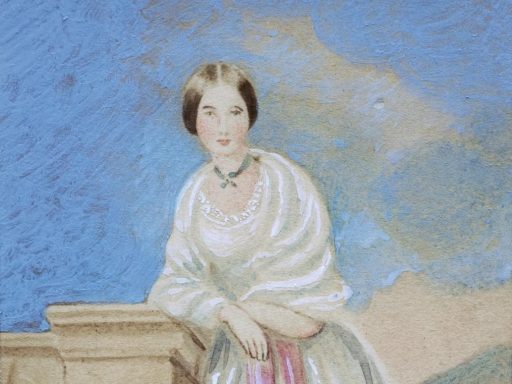
Selina Hurley explores the life and work of Florence Nightingale, the Lady with the Lamp.
Increasing public access to our collections is one of our main priorities. But what do you do when so many of your objects are in storage? Our medical collections are built on the legacy of Victorian entrepreneur Henry Wellcome. He was a millionaire who collected far, wide and en masse. Even our main, highly object-rich medical gallery can only contain a small fraction of the vast number of objects we look after. At our London store, over 40 rooms are devoted […]
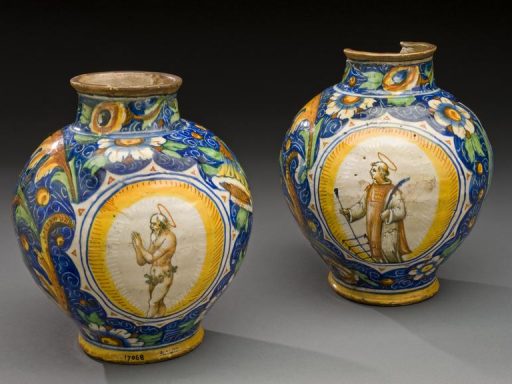
When you think of a medical collection, shelves packed with statues of saints aren’t the first thing that spring to mind, Selina Hurley, curator of medicine, tells us more.
Its a worrying title for a blog, but ‘remember that you must die’ or ‘memento mori’ in Latin, was a common saying that our historical counterparts took to heart. Popular from the 16th to the 19th centuries, memento moris can can be anything from pocket watches, pendants, rings, ribbon slides, even statues and walking sticks. Some carried a lock of hair from a departed loved one, woven into a scene. Most show skeletons, skulls or coffins and – not for […]
What have Humphry Davy, Mike Melvill and my dentist got in common? Answer: They’ve all exploited the chemistry of nitrous oxide, popularly known as ‘laughing gas’. Davy experimented with euphoria-inducing properties of the gas with his friends Samuel Taylor Coleridge and James Watt. Davy was working at the Pneumatic Institution, set up by Thomas Beddoes to investigate the medical properties of inhaled or ‘factitous airs’. Davy pursued his experiments – part scientific, part recreational – with his normal con brio and was […]
On the 1st July they’ll have been in England for three years. The other home countries got theirs some months earlier. On a typical day we might pass hundreds of them, but they’re such a part of the landscape now that we barely notice them at all. On that day in 2007, England followed Scotland, Wales and Northern Ireland by making it illegal to smoke in most enclosed public spaces and work premises. As part of this major public health legislation, […]
Of all our many and varied medical objects in storage, it’s the artificial limbs that visitors often find the most striking. Occupying two whole rooms, the majority were acquired from Queen Mary’s Hospital, Roehampton, which opened 95 years ago this month. The date is significant. By 1915, the trickle of amputees shipped home to Britain in the early weeks of the First World War was becoming a torrent. The authorities, who were obliged to provide them with artificial limbs, were […]