Skip to content

space

Dr Ellen Stofan, NASA’s Chief Scientist, gave the Campaign for Science and Engineering’s 24th Annual Distinguished Lecture at the Science Museum.

On this day (3 November) in 1957, just one month after the launch of Sputnik, the world’s first artificial satellite, a dog called Laika was sent into space, become the first living thing to orbit our planet.

Look closely at this picture from the Russian module of the International Space Station and you will see two images of a man with a white beard. Known as the grandfather of Soviet space travel, this man dreamt of international space stations as early as the 1890s and cosmonauts still pay homage to him today. Born on this day (17 September) in 1857, the man’s name is Konstantin Tsiolkovsky. Tsiolkovsky’s contribution to the science of space travel is diverse and […]

By a guest author

The First Spacewalk

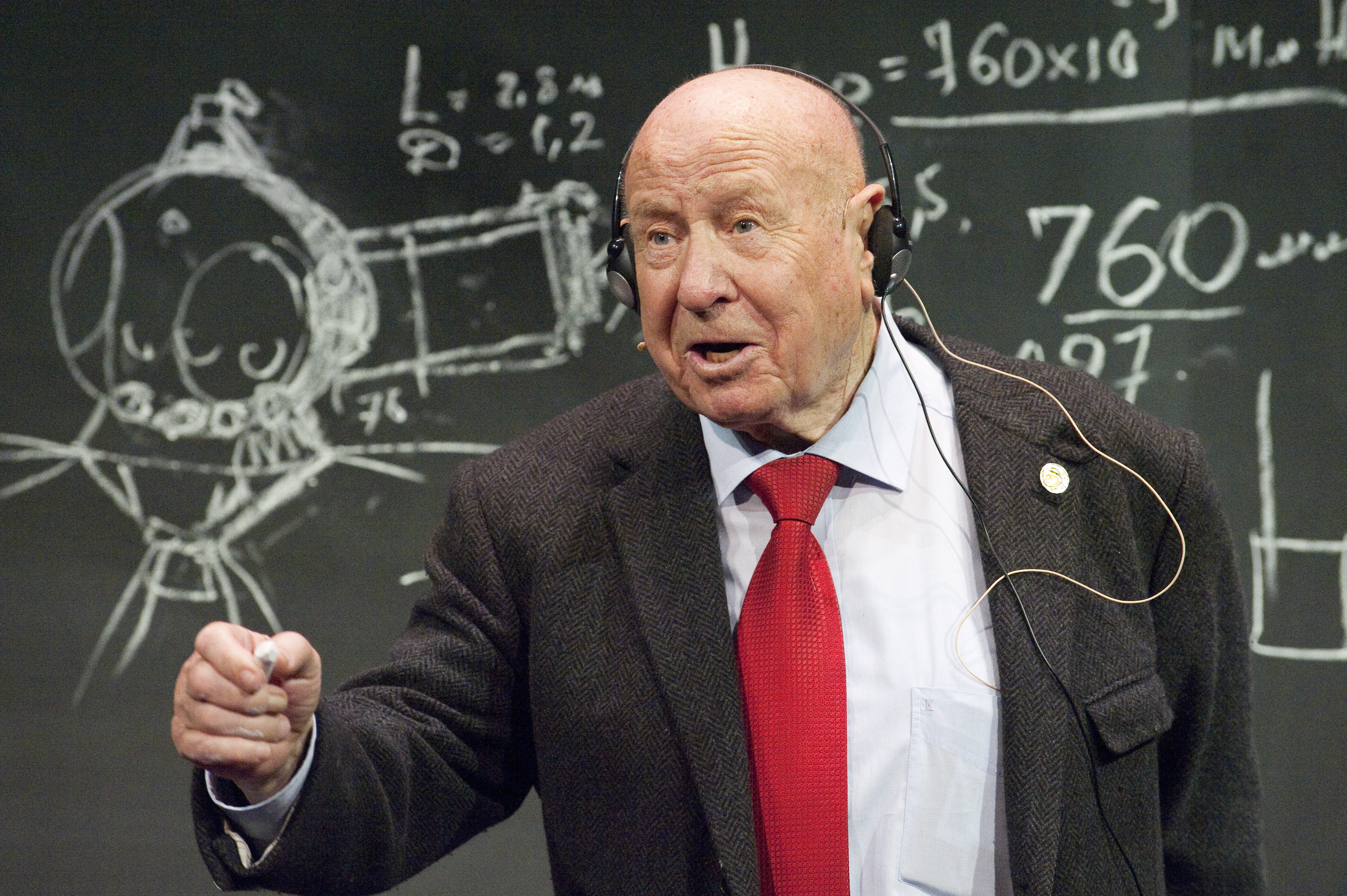
In the ghostly black and white footage of the first ever spacewalk, cosmonaut Alexei Leonov floats in and out of frame. It is a haunting sight, especially when you learn Leonov did not think he would be able to climb back inside the spaceship.

Colin Pillinger, the planetary scientist, has died age 70. Pillinger, who was diagnosed with multiple sclerosis in 2005, began his career at Nasa, analysing samples of moon rock on the Apollo programme, and made headlines in 1989 when he and colleagues at the Open University found traces of organic material in a Mars meteorite that had fallen to Earth. But he is best known for his remarkable and dogged battle to launch Beagle 2 Mars lander, named after HMS Beagle, […]

Julia Tcharfas, Curatorial Assistant for our upcoming Cosmonauts exhibition, reflects on over fifty years of manned space flight.

Julia Attias, a Research Assistant working at the Centre of Human and Aerospace Physiological Sciences (CHAPS), talks about her career in space science for our Beyond Earth festival this weekend.