Sophia Oelman works on the conservation team for Information Age, a brand new gallery about the last 200 years of communication and information technology, opening this autumn. There are a huge range of exciting objects being prepared for the Information Age gallery. As one of the six conservators working on the project, I have the privilege of cleaning, documenting and repairing the objects before they go on public display. My favourite object is the Super Selector Radio Receiver, made around 1927 in London by Selectors […]
From iconic galleries like Exploring Space to award-winning newer additions to the museum like Mathematics: The Winton Gallery our galleries make the museum an inspiring place to explore. We also open temporary exhibitions throughout the year covering a range of topics from science and technology to history and photography.
Stella Williams from our Learning Support Team writes about one of her favourite Science Museum objects The VCS3 was more or less the first portable commercially available synthesizer, unlike previous machines which were housed in large cabinets and were known to take up entire rooms. It was created in 1969 by EMS (Electronic Music Studios), a company founded by Peter Zinovieff. The team at EMS used a combination of computer programming knowledge, advanced engineering and musical ambition to create a […]
By Pete Dickinson, Head of Comms at the Science Museum. What better way to round off events linked to our Collider exhibition about the world’s greatest experiment than with a special screening of Particle Fever, a documentary exploring the same extraordinary story of the Large Hadron Collider at CERN? Critics, such as the New York Times, have given the film rave reviews and there was a palpable buzz when Director Mark Levinson, was joined in the museum’s IMAX theatre by […]
With just two weeks before our Collider exhibition closes, curator Harry Cliff will be inviting you to step inside the world’s greatest experiment as he takes you on an exclusive twitter tour of the exhibition.
Julia Tcharfas, Curatorial Assistant for our upcoming Cosmonauts exhibition, reflects on over fifty years of manned space flight.
As a new exhibition on James Lovelock opens, his daughter Christine recalls her science-filled childhood and the night they sat up waiting for a comet to destroy the Earth.
Corrinne Burns blogs on ADIOS, a GPS enabled javelin which helps tracks icebergs. You can see ADIOS on display in the Museum’s contemporary science gallery.
Roger Highfield blogs on the latest IPCC report, and how you can discover more about climate change at the Science Museum.
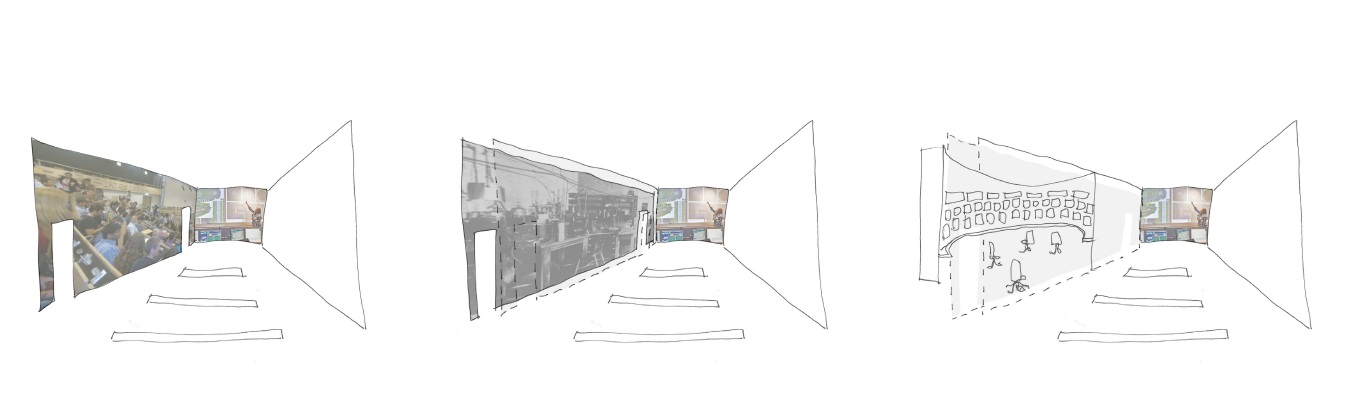
We sat down with Pippa Nissen from Nissen Richards Studio to talk about her team’s work on our Collider exhibition.
Tilly Blyth, Lead Curator for Information Age, reflects on how the World Wide Web came into existence.
Curator Ali Boyle blogs on Big Science, a recent discussion about science and society since WWII that was part of our Collider events series. If you want to get an understanding of giant scientific projects like CERN, go into your kitchen and take your microwave apart. Actually don’t – we recommend that you leave potentially-destructive household experiments to the guidance of Punk Science. But as Jon Agar points out, a household device that we now take for granted contains […]
Alice Williams on working behind the scenes in our conservation team