The gigantic SLS rocket worked flawlessly and the Orion spacecraft, both the capsule containing the crew and the attached European Space Agency’s service module which provided power, life support and propulsion, performed a treat. Perhaps the most important achievement of this Artemis mission was the testing of these technologies – an essential step towards landing humans back on the Moon.
The next mission, Artemis III, will look to test – in Earth orbit – the lander which will eventually take astronauts back to the Moon. Artemis IV will follow – the actual landing mission.
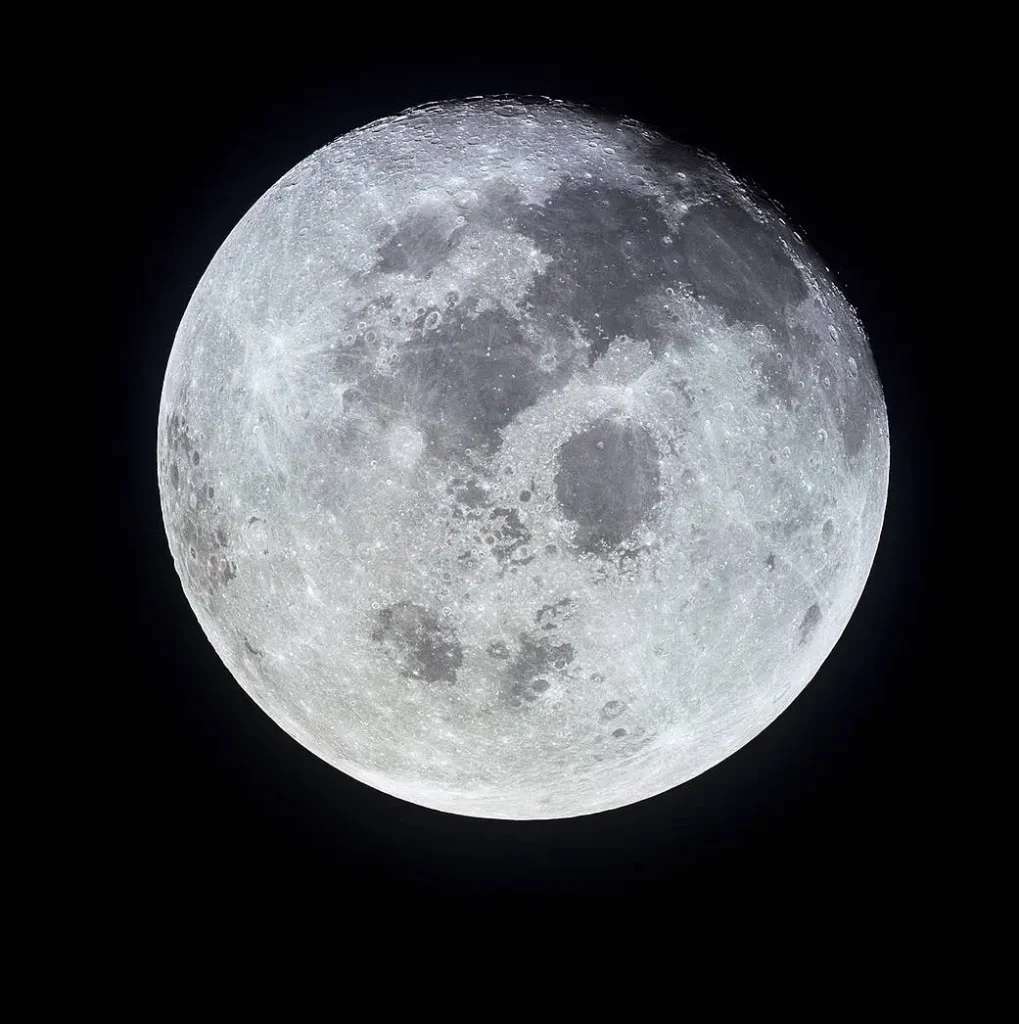
Artemis II certainly looks to have inspired a whole new generation. The Space gallery here at the Science Museum has been busy during and since the Artemis flight. Visitors don’t need to travel 384,400 km to get up close with the Moon; we have a piece of it right here in South Kensington. A sample from one of the largest rocks to be collected by the Apollo astronauts from the lunar surface, it’s a centrepiece in our gallery. Also on display is the world’s fastest crewed vehicle, Apollo 10, as Artemis II’s return to Earth did not break the record set by the Apollo 10 crew back in May 1969, as had been expected.
While we wait for Artemis IV, robotic spacecraft are already touching down on the lunar surface. Some are preparing the way for the Artemis missions to return humans to the Moon, but others are from different space agencies.
In the 1980s – the decade after the last of the Apollo crewed missions – not a single robotic mission by any space agency was sent to the Moon. But since then, and with growing frequency, it has been the target of many, albeit smaller missions from several countries.
In the 2000s orbiters and then landers were sent by the European Space Agency (SMART-1), Japan (SELENE), China (Chang’e 1) and India (Chandrayaan-1). More orbiters followed, including from the US, and then in 2013 China put a lander (Chang’e 3) down on the Moon’s surface, along with a small roving vehicle (Yutu), becoming the third nation to do so after the Soviet Union and the United States in the 1960s.
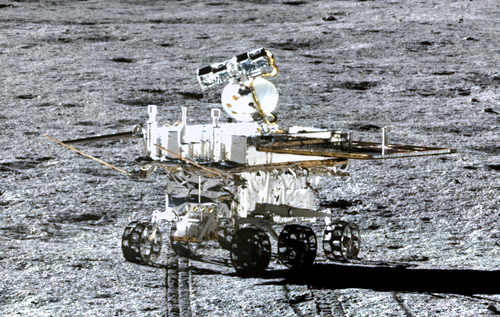
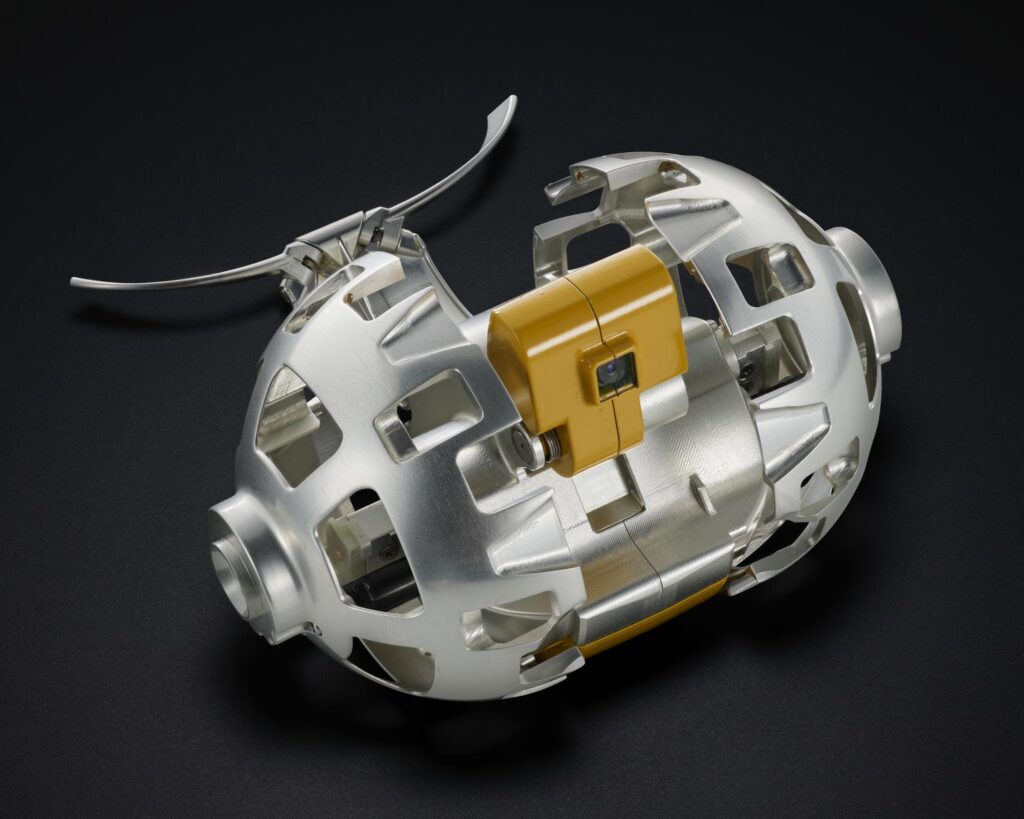
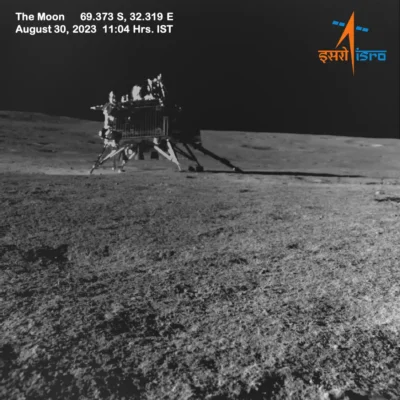
China landed again in 2019 (Chang’e 4) but this time on the far side of the Moon. In 2020 the Chang’e 5 mission brought samples of lunar soil to Earth. India followed up on its lunar programme with the Chandrayaan-3 lander and rover that touched down in 2023. In 2024, the Japanese Space Agency landed the world’s first fully autonomous robot lunar landing project – you can see the engineering model used to test the movement of the Transformable Lunar Robot LEV-2 in our Space gallery. The Moon has become busier than ever before.
And then, on 22 February 2024, a new era of lunar exploration opened when the first private spacecraft landed successfully in the southern polar region of the Moon; Intuitive Machines’ Odysseus.
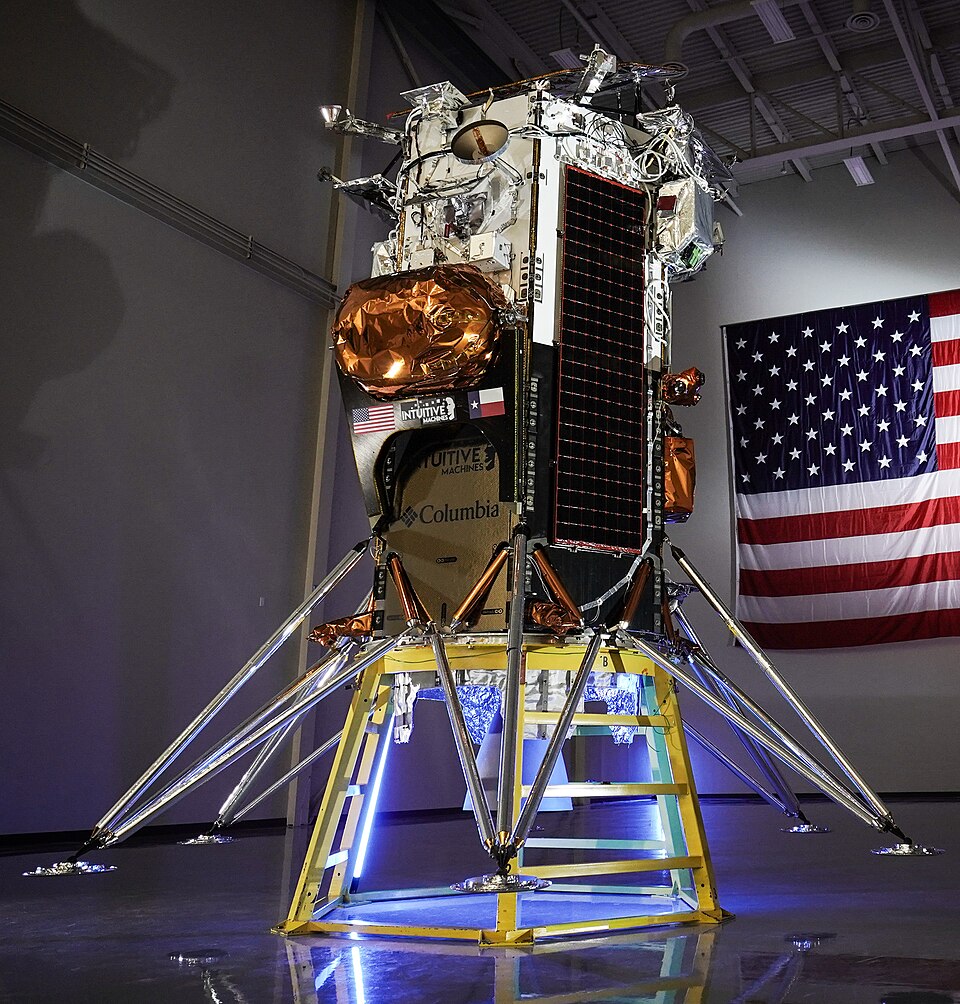
The Moon is now an extraterrestial destination for international space powers large and small, national and corporate. They want to use it for scientific investigation, human settlement and now commercial activity.
With all these interests now underway, and with more planned for the future, the question arises, once again: who owns the Moon? It is a question the world has been asking since humanity launched its first crewed missions into space sixty-five years ago.
In 1961, the year the first four humans entered the space realm – Yuri Gagarin, Alan Shepard, Gus Grissom and Gherman Titov – the United Nations issued a resolution on the peaceful uses of outer space. International relations were especially fraught at the time; the Berlin Wall had been built and was a potential nuclear flashpoint between East and West. Nevertheless, both the Soviet Union and the United States supported the UN resolution.
In 1967 the General Assembly of the UN agreed the Outer Space Treaty on the principles governing the exploration and use of outer space ‘including the Moon and Other Celestial Bodies.’ For these it prohibited ‘national appropriation by claim of sovereignty, by means of use or occupation, or by any other means.’ It did allow, however, exploration and scientific investigation ‘for the benefit and interests of all countries.’

The Outer Space Treaty still stands but makes no mention of an activity that not so many years ago was considered pure science fiction: space mining. As recently as 2009 the film Moon imagined the story of a sole worker in the distant future overseeing Helium-3 extraction on the Moon for use in nuclear fusion reactors on Earth.
Today, there are private and governmental entities in several countries planning to survey for He3 on the Moon for future extraction, just as in the movie.
In 2020 the US government and NASA issued the Artemis Accords, or to give them their full title, ‘Principles for cooperation in the civil exploration and use of the Moon, Mars, comets and asteroids for peaceful purposes.’ They relate directly to the Artemis programme but seek also to establish new protocols for space activity by all nations.
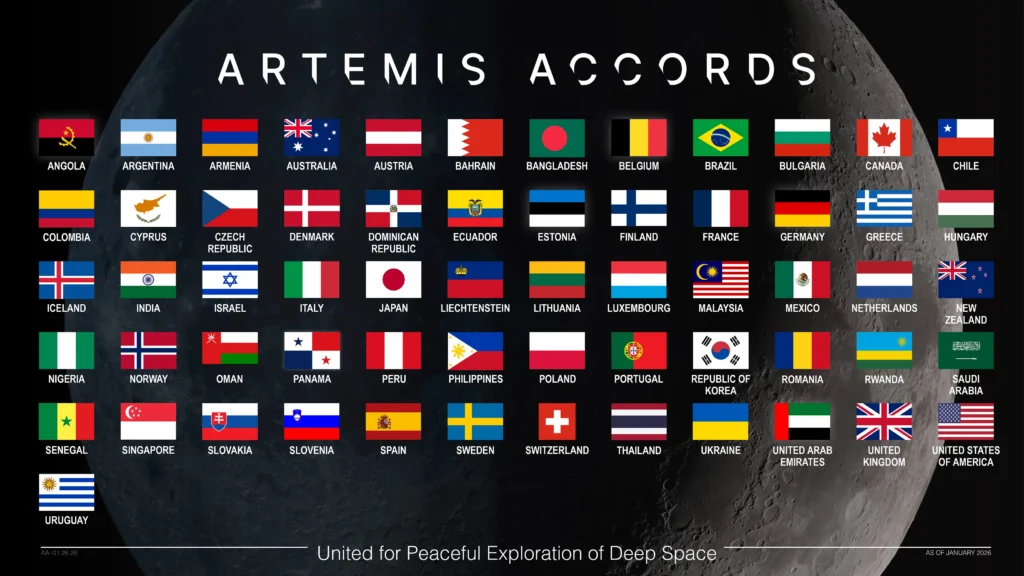
By the beginning of January 2026 over 60 countries had signed up to the Accords. They are, like the original Treaty, non-binding but are an attempt to update and to clarify that sixty-year-old agreement.
They follow much of that Treaty’s thinking and with equivalent conclusions but recognise also, ‘the global benefits of space exploration and commerce.’ The Accords state ‘that the utilization of space resources can benefit humankind by providing critical support for safe and sustainable operations.’
The Accords’ supporters say that they align the use of the space environment with that of the oceans on Earth. Oceans, beyond territorial waters, belong to no one, as agreed under a United Nations Convention. Deep sea mining for purposes of exploration and scientific investigation is permitted under the UN convention; agreement has yet to be reached on the mining of seas as a commercial activity. Answers are no clearer in space.
As it is, the engineering required to mine extraterrestrial resources for commercial gain remains a major challenge and is likely still many years off. So, for the time being the words and sentiment of the Outer Space Treaty remind us that the Moon continues to belong to no one single entity – nation or enterprise – and is ‘a province for all.’