In her extraordinary life Dame Stephanie ‘Steve’ Shirley (16 September 1933, 9 August 2025) overcame adversity and defied gender stereotypes, becoming a trailblazing entrepreneur in the male-dominated world of computing.
Her pioneering all-female software firm created flexible work practices decades before remote working became mainstream. Since the 1990s, Shirley directed her vast resources and influence toward autism advocacy and digital innovation through her Foundation.
Born Vera Stephanie Buchthal in Dortmund, Germany in September 1933, she was the daughter of a Jewish judge, who lost his position under the Nazi regime, and a non-Jewish mother.
In 1939, at age five, she and her sister were brought to Britain via the Kindertransport, where she was fostered in Sutton Coldfield.
She later reflected, ’In Oswestry I had five wonderful years of peace’ following her wartime trauma. She developed a talent for mathematics, studying through evening classes at the local boys’ grammar school, as her school lacked proper maths teaching.
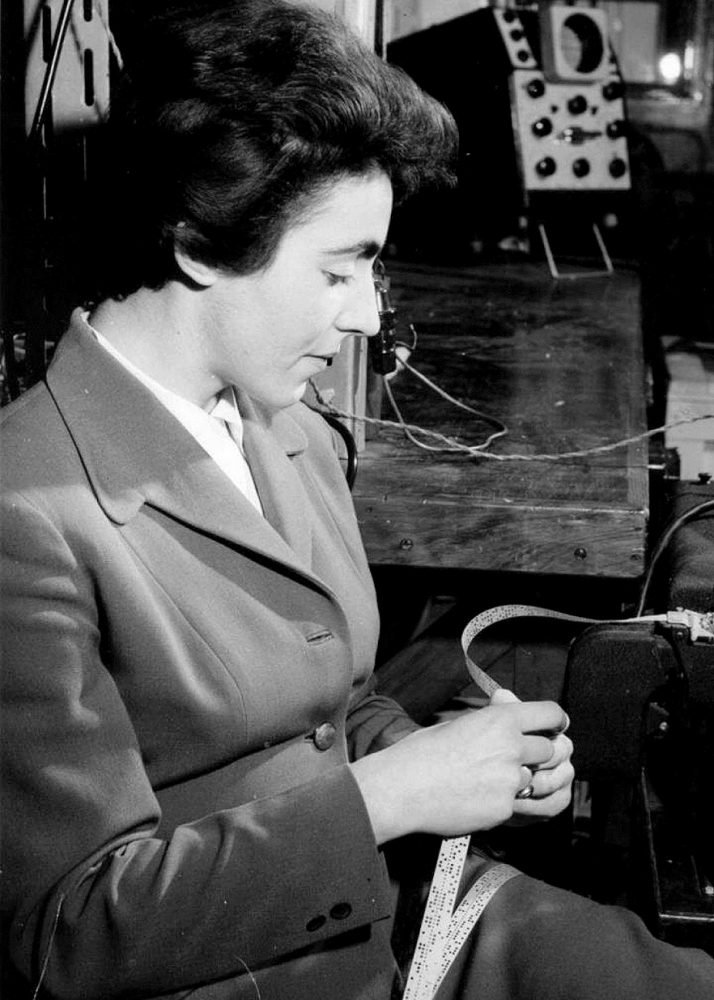
At 18, Shirley joined the Post Office Research Station in Dollis Hill, building computers and coding in machine language. While there she helped design the electronic random number indicator equipment, named ERNIE.

This fantastically innovative machine was developed to randomly select Premium Bond numbers, a new scheme launched in 1956 by the post-war government to reduce inflation and encourage more people to save.
The public had the chance to win life changing sums through tax-free prizes in monthly prize draws and ERNIE quickly became a household name. For many people it was the first ‘electronic brain’ they had ever heard of.
Shirley – the only woman working on the project – was responsible for ensuring the machine was truly random. She worked alongside some of the same engineers who had worked on the Second World War code-breaking digital electronic computer Colossus.
These British computer pioneers, Tommy Flowers, Sydney Broadhurst and Harry Fensom are celebrated in the Science Museum’s Information Age gallery.

While working at the Post Office Shirley took evening classes for six years for a BSc in Mathematics. In 1959, she moved on to CDL Ltd, working with ICT 1301 computer designs leaving shortly afterwards after realising the limited options for women to develop in the field.
Shirley endured significant sexism in the workplace, from being overlooked for promotion and training to outright harassment. In 1962, armed with just £6 and sensing no other way to make the career progress she wanted, she founded Freelance Programmers (later F International, then Xansa plc, now part of Sopra Steria), a company run by a woman exclusively for women.
Confronted with sexism in the tech industry — including being ignored until she signed letters as “Steve Shirley” — she pioneered a home-based software workforce composed mainly of women with caring responsibilities, recruiting through adverts posted in Libraries and GP practices.
This idea was truly radical as at the time women were not allowed to open a bank account without permission from a male relative or husband. Of the first 300 employees, only three were male — until the 1975 Sex Discrimination Act mandated gender balance.
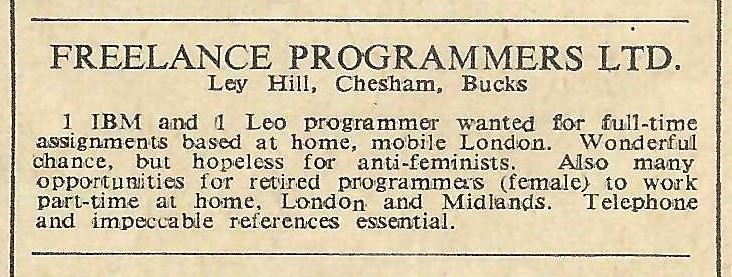
Freelance Programmers was enormously successful, securing high‑profile contracts such as programming for Concorde’s black box recorder and NATO’s software standards and eventually floated on the stock exchange. Shirley gave significant equity to her staff: around 70 employees became millionaires, and the company reached a valuation in the multi‑billion‑dollar range. Shirley retired in 1993, at age 60, becoming honorary life president thereafter.

Shirley founded The Shirley Foundation in 1996, focused on autism and information technology projects. She has donated over £67 million to philanthropic causes, especially autism-related initiatives such as Autism at Kingwood, Prior’s Court Foundation, and Autistica, collectively supporting hundreds of autistic individuals and employing thousands.
Motivated by her own experience raising her only son, Giles, who had profound autism and died in 1998, she pioneered disability services, medical research, and policy advocacy. The Foundation has provided major awards to the Worshipful Company of Information Technologists and was the founding donor of the Oxford Internet Institute.
In 2009–10, she served as the UK’s first Ambassador for Philanthropy. Shirley was awarded several honours in recognition of her professional and charitable work, appointed an OBE in 1980 and elevated to Dame Commander in 2000.
Her 2015 TED Talk received a standing ovation and has over two million views.
Shirley was a computer industry and women’s rights visionary, changing the landscape of what an IT company could be and lifting the glass ceiling for female programmers through remote and flexible working.
Driven by her mantra “a life worth saving”, Shirley spent her life determined to make a difference, leaving a legacy that will continue to shape, support and inspire future generations.