What began with the transfer of 114,000 objects from Sir Henry Wellcome’s collection into the Science Museum’s care in 1976 has grown into a remarkable collaboration between the museum and Wellcome, the global health and scientific research charity. For five decades, this partnership has helped us explore and share stories about health and medicine – past, present and future – through collections, exhibitions, events and research.
From early x-ray machines to surgical sets, drug jars to amulets for warding off disease – Sir Henry Wellcome’s Museum collection is an endlessly fascinating treasure trove encompassing a myriad of ways people over time have looked to preserve their health and treat disease. You can see five of our favourite objects on display in Medicine: The Wellcome Galleries at the end of this blog post.
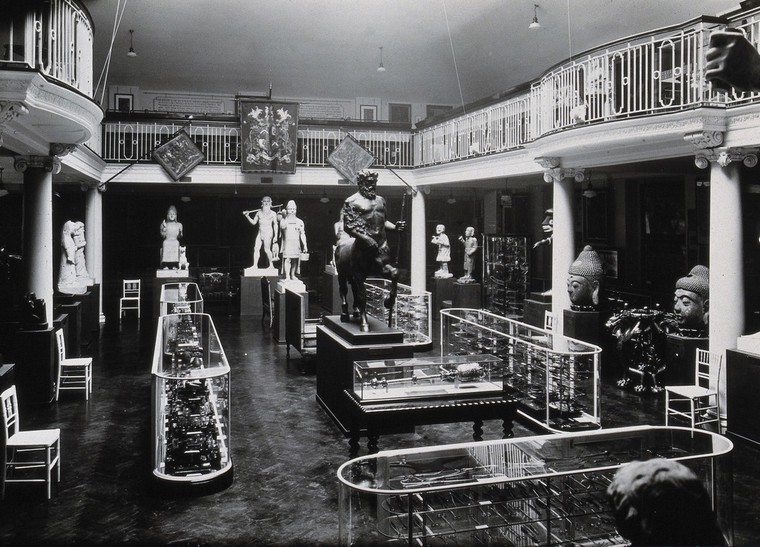
The initial collection was assembled by Sir Henry Wellcome (1853-1936), a pharmaceutical entrepreneur who founded a leading drug company – Burroughs Wellcome & Co– in 1880. An avid collector of medical and cultural artefacts, his ambition was to create an all-encompassing ‘Museum of Man’ to ‘illustrate the development of the art and science of healing throughout the ages’. By the time Wellcome died in 1936, he had accumulated over a million objects from around the world.
By the 1970s, Wellcome’s Trustees saw the opportunity to form a national collection of the history of medicine at the Science Museum, so that the objects could reach a larger audience and benefit from the collection care expertise the Science Museum offered. Dame Magaret Weston, then the Director of the Science Museum, accepted this proposal in 1973, and the transfer of the collection was announced on the 22 June 1976 by Lord Donaldson, Minister for Arts, Education & Science.
A transformational transfer
The arrival of the collection transformed the Science Museum, which previously had never collected health or medicine, and laid the foundations for the medical galleries visitors explore today. When the transfer was completed by 1983, it effectively doubled the size of the Museum’s collection overnight. Taking on this collection, the Science Museum invested in new storage facilities, and a brand new team of 30 curators and cataloguers to organise the move of that extraordinary number of objects.

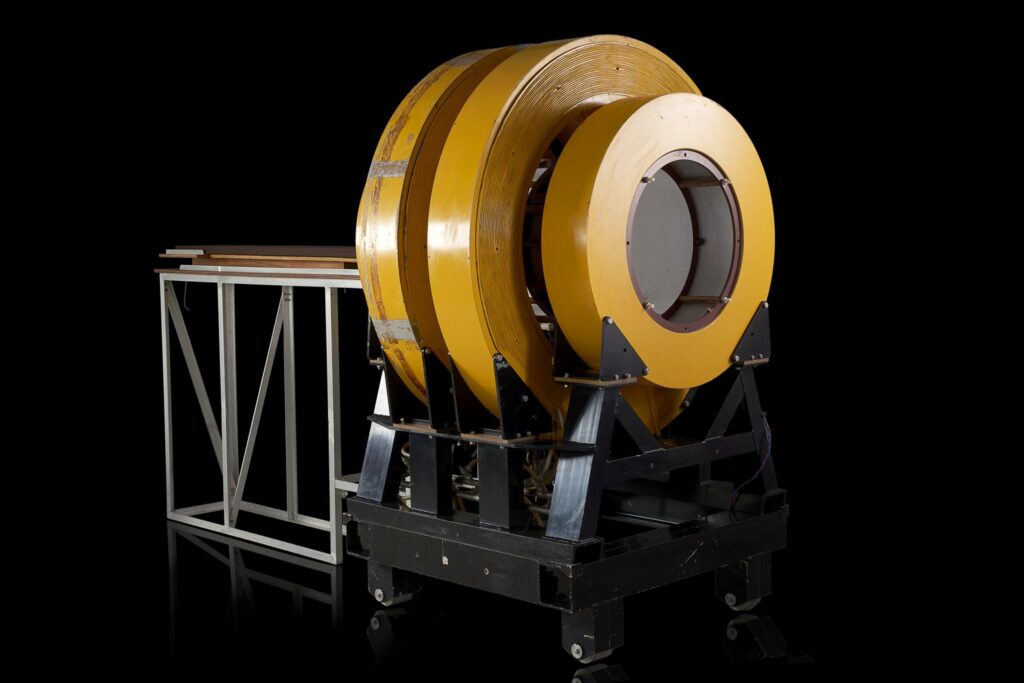
Taking on the collection changed the Science Museum’s approach to collecting in other ways too. The new curatorial team began a flurry of activity to collect the latest innovations in medicine, including CT and MRI scanning technology, psychology tools, and developments in genomics. Today, our medicine curators continue to collect objects and stories that reflect the changing relationship between science, health and medicine.
Museum galleries
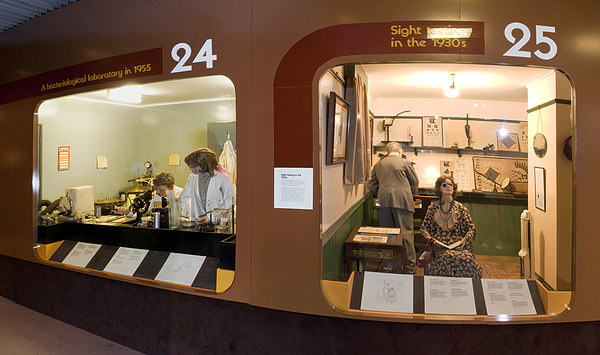
In the 1980s, taking on Sir Henry Wellcome’s Museum Collection, created a wealth of new display and exhibition opportunities at the Science Museum. The Science Museum launched two new galleries to showcase the collection to visitors. Glimpses of Medical History opened in 1980, featuring dioramas and room sets (many featuring objects from the collection) designed to ‘help the visitor to gain an insight into how it might have felt to be a doctor or patient at other times in history or in other cultures’. A year later came The Science and Art of Medicine, which ambitiously attempted to display 5,000 objects within a chronological history of medicine from antiquity to the modern age.
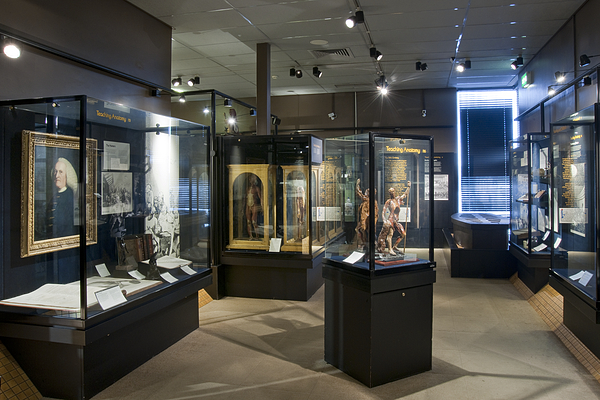
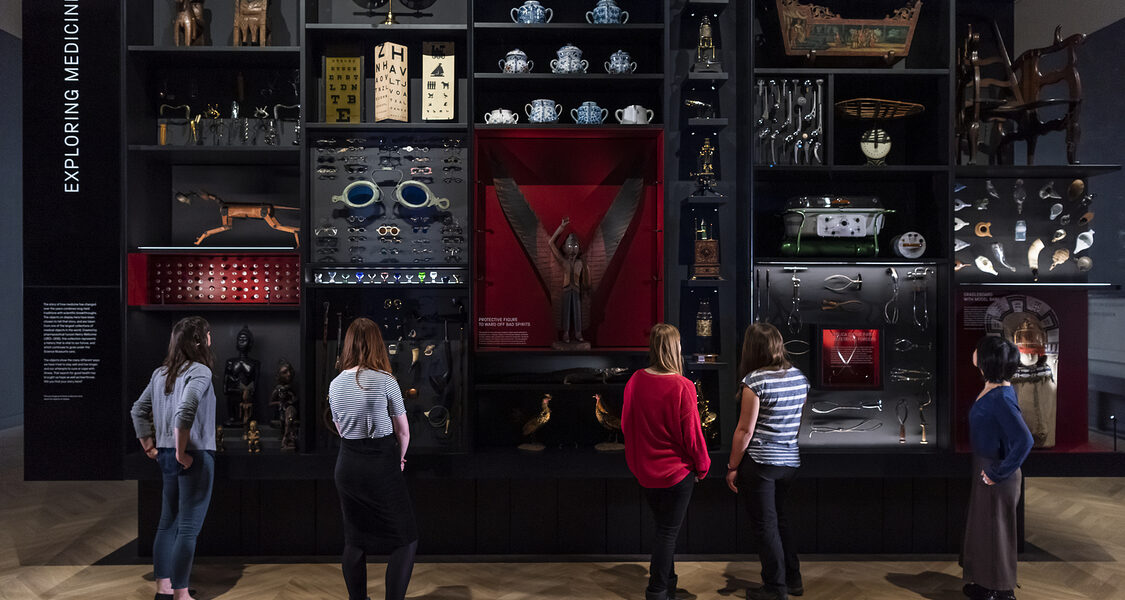
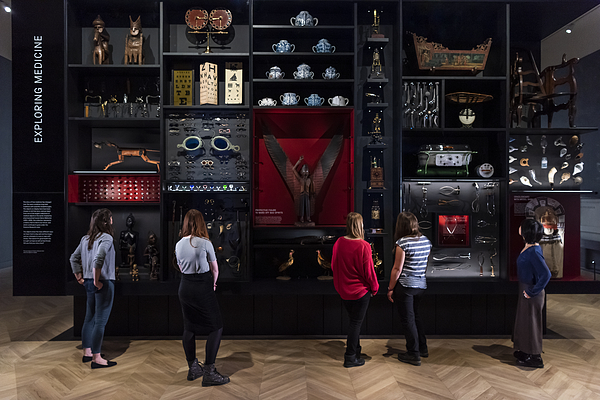
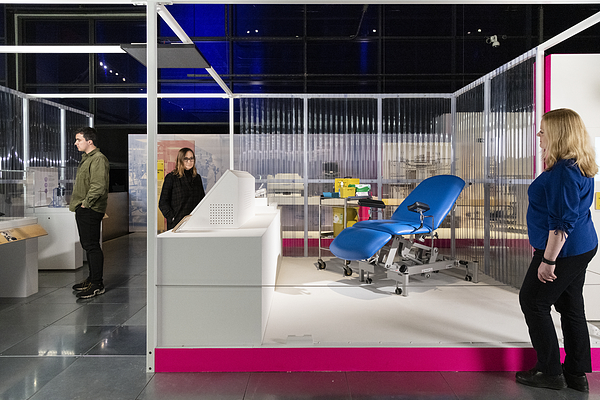
Today, visitors can explore these collections in Medicine: The Wellcome Galleries, which opened in 2019 and traces more than 500 years of medical history through extraordinary objects and personal stories. Featuring three thousand objects and covering an area equivalent to 1,500 hospital beds, it is the magnificent new home for the most significant medical collections in the world, including objects like Fleming’s penicillin mould, two hundred year old wax anatomical models, the very first stethoscope, lancets used by Edward Jenner in his smallpox vaccinations, and even robotic surgery equipment.
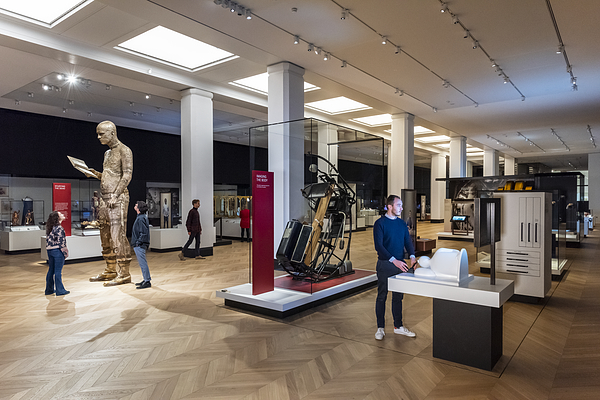
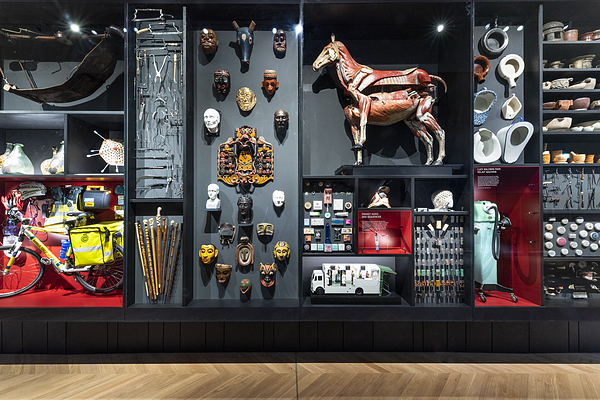
Beyond the galleries, the partnership has resulted in some of the most forward-thinking and experimental temporary exhibitions and public programmes at both institutions, exploring wide ranging themes Future Face (2004), Electricity: The Spark of Life and Brains: Mind as Matter and Temp (2015) and ground-breaking online projects such as Brought to Life (2009), a history of medicine website digitizing 4000 medical objects and creating web resources for schools.
In 2022, Wellcome supported Injecting Hope: The race for a Covid-19 vaccine (2022), our popular exhibition showcasing the global effort to develop vaccines at speed, which toured venues in the UK, China and India and was seen by around 5 million people.
Communities and research collaborations
The partnership extends far beyond collecting and object displays. Caring for human remains and addressing the complex colonial histories associated with some objects in the collection requires ongoing collaboration between colleagues across both institutions. Together, we support research that improves understanding of these objects, increases transparency about their histories and strengthens relationships with the communities connected to them.
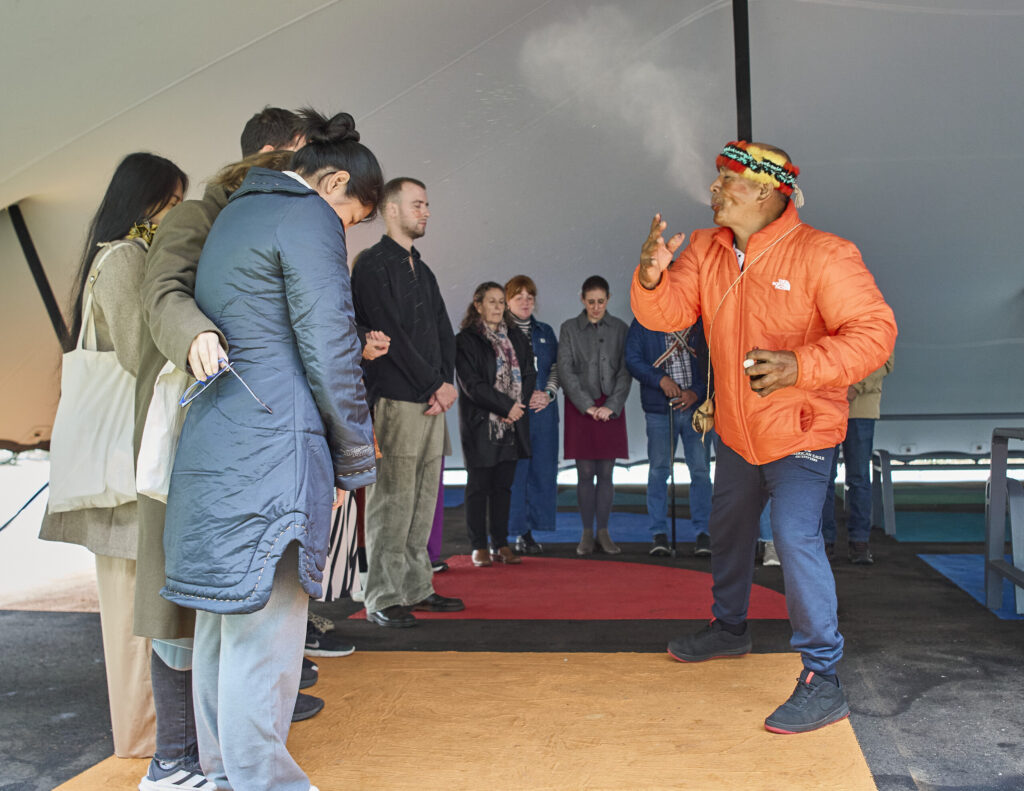
A recent example brought together colleagues from both institutions to support a visit by Shuar representatives from Ecuador and researchers from Universidad San Francisco de Quito, to examine 50 human and animal tsantsas (shrunken heads) in the collection. Working together with communities like the Shuar, has deepened conversations around the understanding and future care of these cultural materials, providing more detailed information including the local names of beetle wings used in earrings and adornments.
The Future
Fifty years after the transfer of the collection, the partnership between the Science Museum and Wellcome continues to evolve. From collecting contemporary medical innovations to supporting collaborative research and engaging with communities connected to the collections, both institutions remain committed to exploring how medicine shapes our lives.
As we celebrate this milestone anniversary, we’re also looking ahead. The questions that fascinated Henry Wellcome – how people understand health, illness and healing – remain as relevant today as ever. Together, we’ll continue to collect, research and share these stories with future generations.
Below, we’ve selected five favourite objects from the collection that showcase its extraordinary breadth and diversity.
Five of our favourite objects
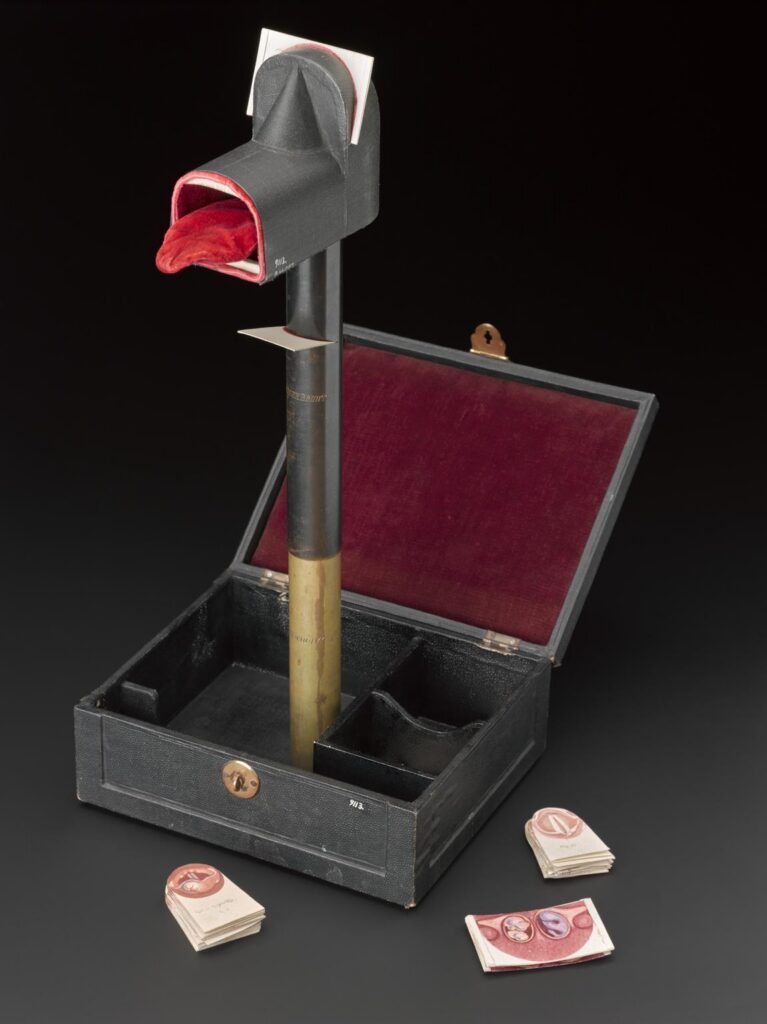
Phantom Larynx, 1870-1916
With its velvet tongue, this teaching model imitates a mouth and throat, and was designed to help train doctors in how to examine patients using tools such as laryngeal mirrors. Illustrations of different conditions that could affect the tonsils and throat could be slotted in at two different points.
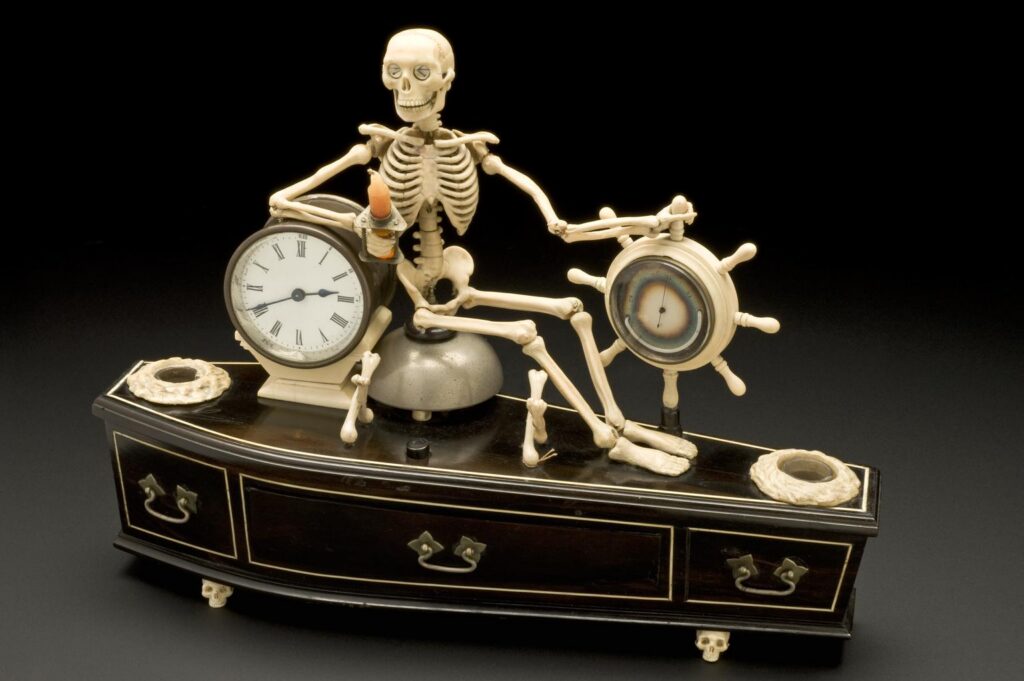
Skeleton on a coffin alarm clock, 1840-1900
This elaborate alarm clock is a ‘memento mori’, which translates from Latin as ‘Remember you must die’. Objects like this served to prompt people to think about the shortness of life and the inevitability of death. When the alarm bell chimed, a small card running up the skeleton’s spinal column retracted to make its jaw open and the eyes roll.
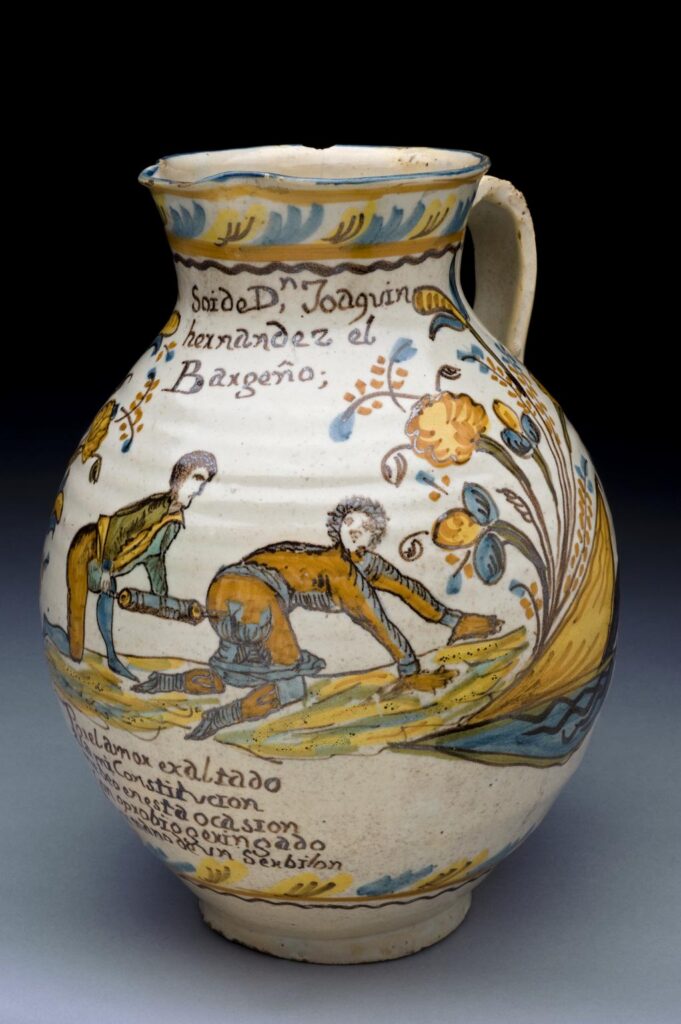
Enema scene depicted on earthenware jug, date unknown
This tin-glazed earthenware jug features a striking scene of a man receiving an enema – one of the oldest medical procedures in history. Enema’s were commonly used to relieve constipation or even deliver treatments. Translated from its Spanish inscription, the jug reads, ‘I am Don Joaquin Hernandez’s jar. Through intense devotion to my constitution I find myself on this occasion shamefully syringed at the hands of a serf’.
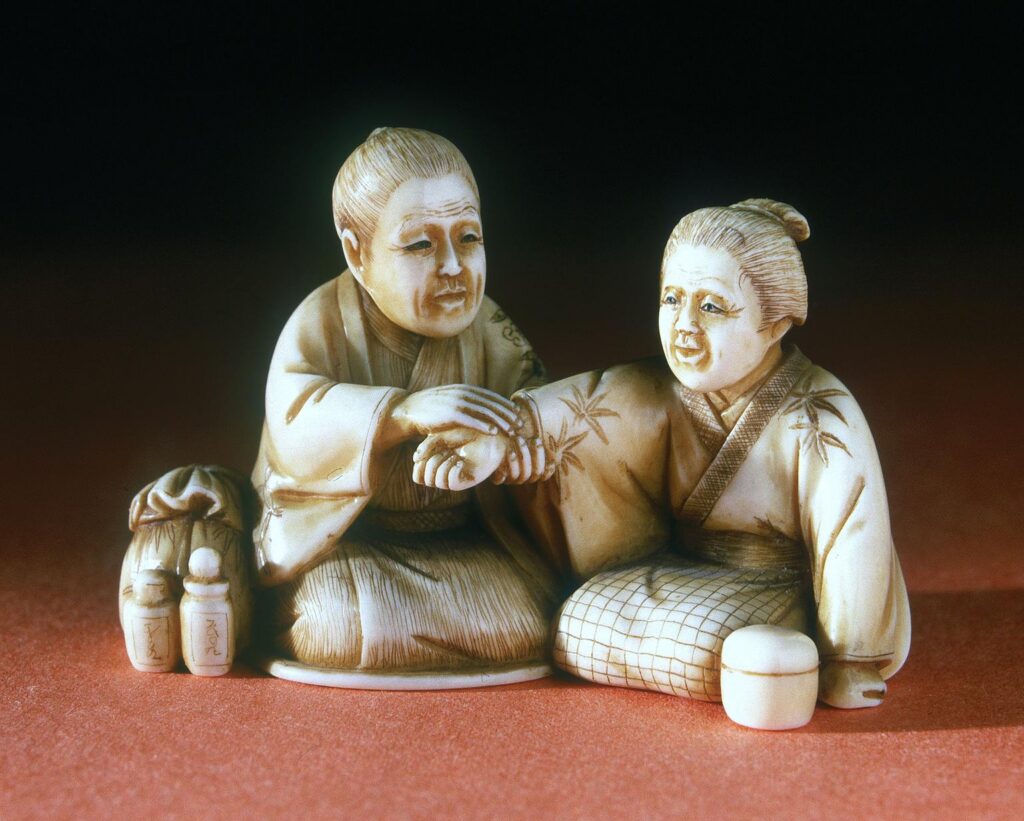
Ivory netsuke showing a doctor taking the pulse of a patient, 1871-1900
This tiny carving of two figures, shows a Japanese doctor feeling the pulse of his female patient. Netsuke are small carved ornaments that could be used to fasten objects, such as medicine boxes or tobacco pouches, from the sash of a kimono – a traditional form of Japanese dress. Later they became ornately sculpted objects like this one.
In Traditional Japanese medicine, the pulse is believed to be an indication of how strong or weak the energy force, known as qi, is within the body. Interpreting the signs and symptoms of patient’s bodies has long been a key skill medical practitioners across traditions have had to develop.
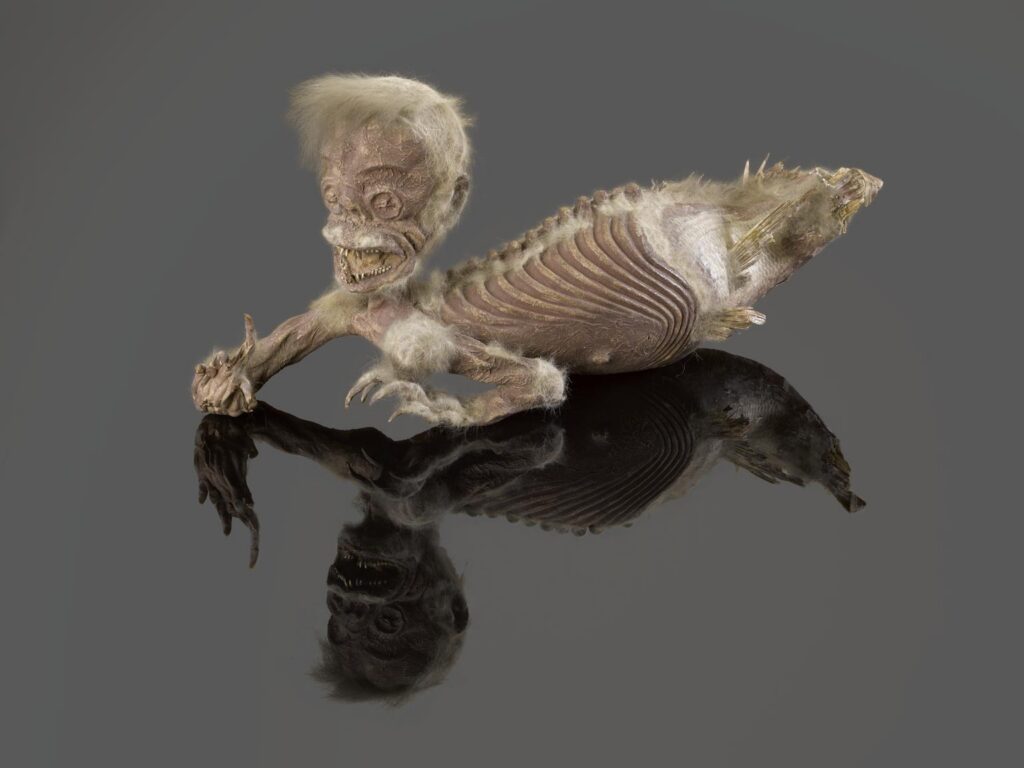
‘Merman’, 1850-1900
This unusual and creepy looking ‘merman’ is one of our favourite curiosities within the collection. Made from a combination of fish, fur and paper-mache, these man-made objects are associated with figures in Japanese folklore called ningyo (meaning ‘human-fish’). These ‘mer-people’ were very different from those of Western traditions, they monstrous, more fish than human with bony fingers and sharp claws. It was likely this ‘merman’ was made for tourists or private collectors in the late nineteenth century.