On 4 July 1776, 250 years ago today, rebel American colonists adopted the Declaration of Independence, a document that announced their separation from Britain. The people who only a few years earlier considered themselves British overseas were writing the first chapters of US history with repercussions felt across the world.
The Declaration followed a period of conflict between the British and the American colonists. The need to rally the diverse colonial population and attract international support made an explanation for independence ‘necessary’. Thomas Jefferson, Benjamin Franklin, John Adams, Robert R. Livingston and Roger Sherman were charged with the task of writing this document, and it was Jefferson who was the main drafter. Franklin and Adams then made edits, before the Declaration was presented and debated in the Continental Congress, the governing body which coordinated American resistance to British rule.
On 2 July, the representatives of the Thirteen Colonies gathered in Philadelphia and voted for independence from Britain, with the final draft of the Declaration approved two days later. On the night of 4 July, the Declaration’s manuscript was rushed for printing to John Dunlap, the Congress’s official printer.
On the morning of 5 July, Dunlap’s broadside, a poster-like piece of paper with the complete text which was dispatched to various committees and military commanders. It was read out loud in assemblies, coffeehouses and after church throughout the colonies, got reproduced in newspapers and sent enclosed in letters across the Atlantic.
In New York City, after a Declaration public reading, a mob of rebel soldiers and civilians tore down King George III’s statue at Manhattan’s Bowling Green. The statue’s lead parts were melted into bullets for George Washington’s army.
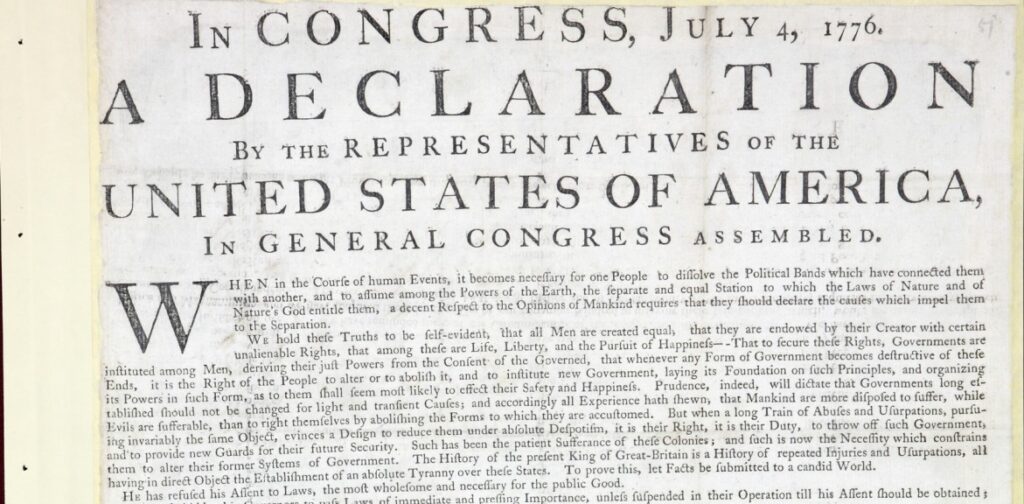
The Dunlap broadsides, also known as Dunlap prints, were the first published copies of the Declaration of Independence, with an estimate of 200 original prints. Today, there are only 26 known surviving copies of this foundational document in the world. One of these rare copies will go on display in our Becoming America: How Science Shaped a Nation, supported by Griffin Catalyst exhibition this October.
The second paragraph has been the Declaration’s most famous and quotable passage equally revered and criticised:
We hold these Truths to be self-evident, that all Men are created equal, that they are endowed by their Creator with certain unalienable Rights, that among these are Life, Liberty, and the Pursuit of Happiness
It is the Declaration’s opening paragraph, however, that can help shed light to its connections to the scientific thinking of its time.
WHEN in the Course of human Events, it becomes necessary for one People to dissolve the Political Bands which have connected them with another, and to assume among the Powers of the Earth, the separate and equal Station to which the Laws of Nature and of Nature’s God entitle them, a decent Respect to the Opinions of Mankind requires that they should declare the causes which impel them to the Separation.
The separation from Britain was presented with similar language used in contemporary scientific literature, which embraced empiricism, the view that knowledge is produced through experience. Observation, experimentation and the application of reason were the principles that shaped the rise of modern science in the 17th and 18th centuries by natural philosophers such as the British Francis Bacon and Isaac Newton.
According to Jefferson, who commissioned portraits of them to adorn his home, these were two of the ‘three greatest men that have ever lived, without any exception’ (the third was John Locke whose philosophy on ‘natural rights’ is considered as another major Declaration influence).
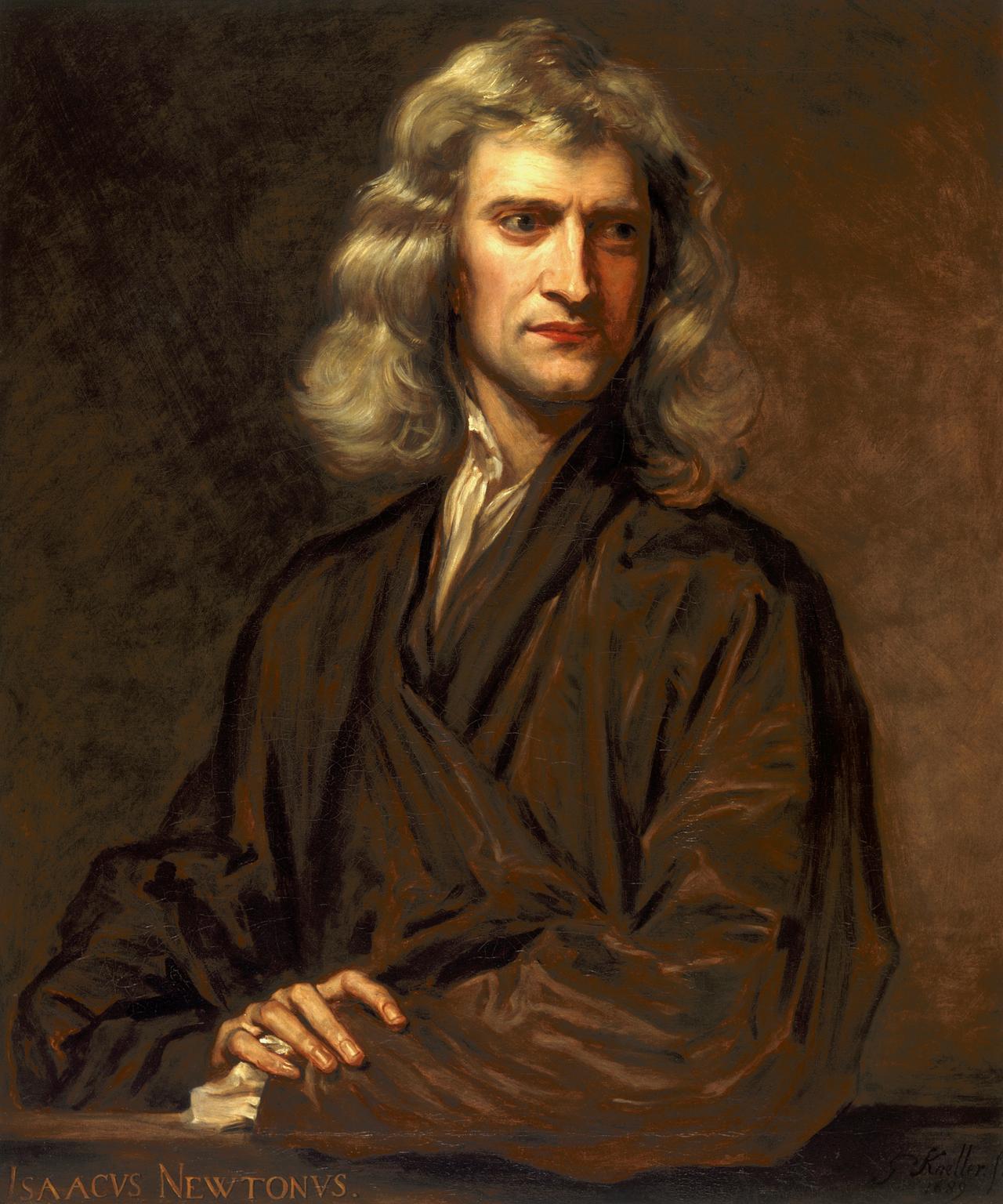
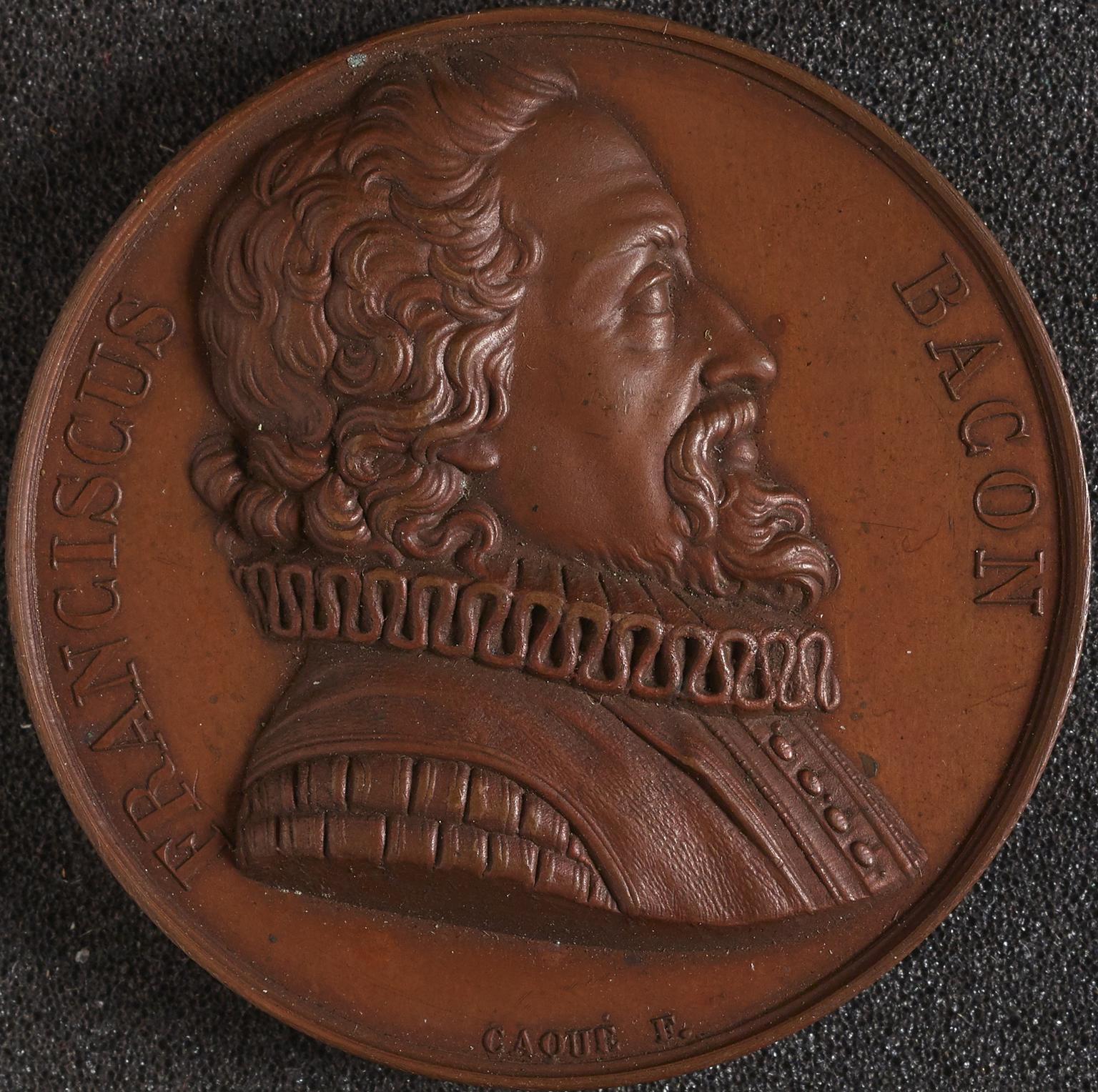
The founders presented independence as ‘necessary’, dictated by the ‘course of human events’ and judged according to ‘the Laws of nature and of Nature’s God’. These ‘laws’ were immutable facts of nature as created by God, as opposed to the laws of man including monarchy and its rule of divine right.
The same laws of nature were manifested in the new scientific discoveries of electricity and magnetism. They were ‘self-evident’ truths, axioms that needed no proof, echoing ancient Greek mathematician Euclid who used such axioms to establish the foundations of geometry.
The preamble in the Declaration is followed by laying out more facts in the form of grievances against the King George III, rather than Parliament, to explain the necessity of independence.
Despite the idea that ‘all men are created equal’, the reality of nation-building, much like the Enlightenment, was inevitably shaped by the social, cultural and economic dynamics of the time.
The expansion of Eurocentric ‘universal’ knowledge relied on both Indigenous and African knowledge. Millions of Africans were enslaved and trafficked to the Americas, bringing their diverse scientific knowledge, essential for the lucrative machine of plantation agriculture. And while Indigenous Americans, the original inhabitants of the continent – referred to as ‘Indian savages’ in the Declaration – were displaced from their homelands, their centuries-old knowledge persisted.
At the time of the Declaration’s writing, of the estimated 2.5 million people living in the colonies, 500,000 were enslaved people of African descent with about 200,000 living in Jefferson’s Virginia.
Jefferson himself enslaved about 200 people at the time. The contradictions between this reality of discrimination and the Declaration’s aspirations of liberty and equality will continue to fuel discussions and writings.
At the time it was first heard and read, such language of liberty, rights and justice provided people of African descent and Indigenous Americans with one more tool to fight injustice, when invoked in petitions, letters and legal cases towards abolition and self-determination.
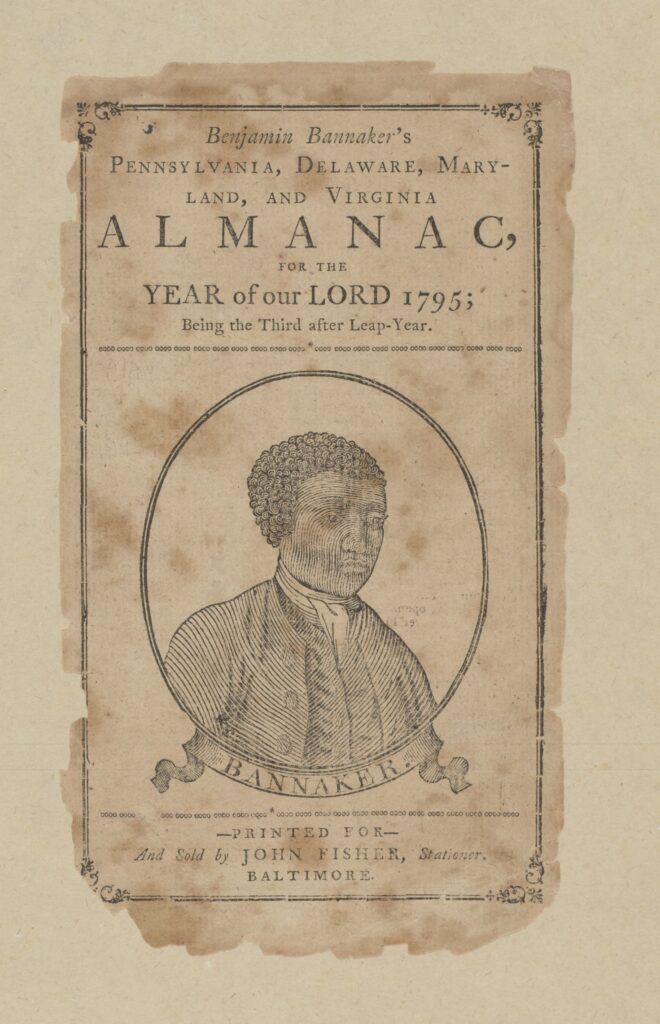
Among them was Benjamin Banneker, an African American surveyor and astronomer who challenged the ideas of African intellectual inferiority and America’s one-sided depiction of liberty. In a 1791 letter to Thomas Jefferson, Banneker directly criticized the ‘inhumane captivity’ of people of African descent where he quoted the Declaration back at his drafter.
On display in the Becoming America exhibition will be an edition of the almanac he published from 1792 to 1797, where he shared astronomical calculations, church calendars and poems shows his dignified portrait on the cover, deliberately presenting Banneker as the intellectual equal of any white contemporary.
The founders’ scientific engagement informed the intellectual framework of the Declaration during the Revolutionary years but in the young USA, science was employed literally to create physical space necessary for ‘life, liberty and the pursuit of happiness’.
Jefferson’s famous ‘American grid’ for both rural and urban planning was adopted by Congress in 1785. It transformed the diverse and contested American landscape into a uniform blank-state, mathematically precise plots of land that individuals, companies and the government could buy and sell.
Book your tickets now to see a rare print Dunlap print of the Declaration and over a hundred historic objects in our free exhibition Becoming America: How Science Shaped a Nation, supported by Griffin Catalyst, opening on 23 October.
Exhibition Curator Elissavet Ntoulia contributed to this blog post.
Further reading and sources:
- ‘The Course of Human Events: The Declaration of Independence and the Historical Origins of the United States’, Steven Sarson, University of Virginia Press, 2025
- ‘Gentlemen Scientists and Revolutionaries: The Founding Fathers in the Age of Enlightenment’, Tom Shachtman, St. Martin’s Press, 2014
- ‘Whose Independence?’, Annette Gordon-Reed, The Atlantic, November 2025