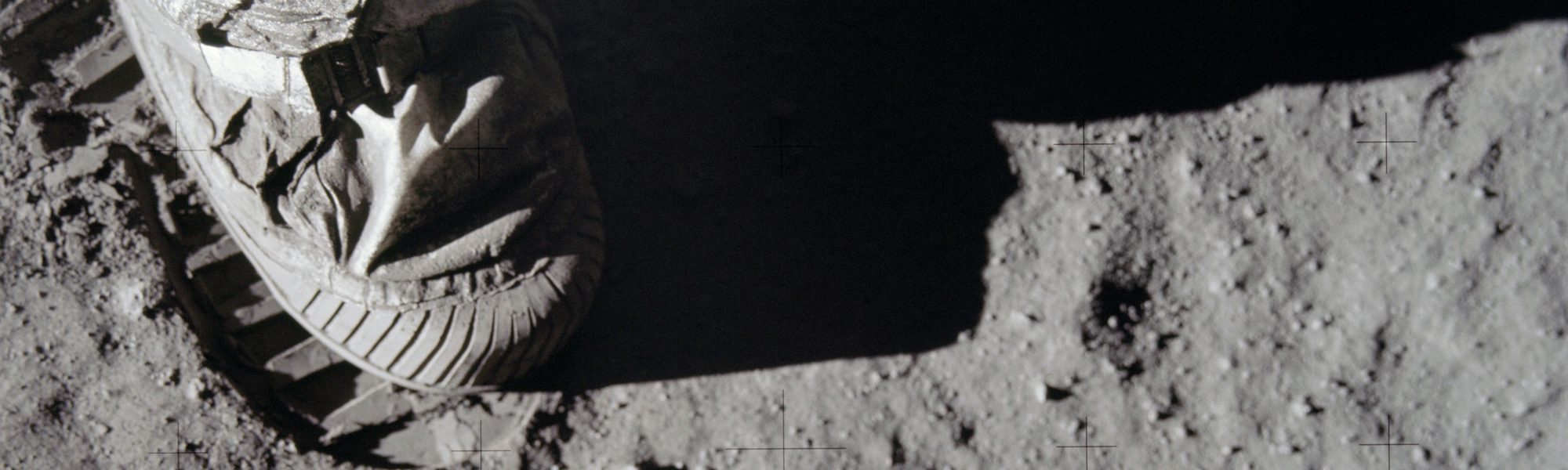
Stop 1: Free Space Show
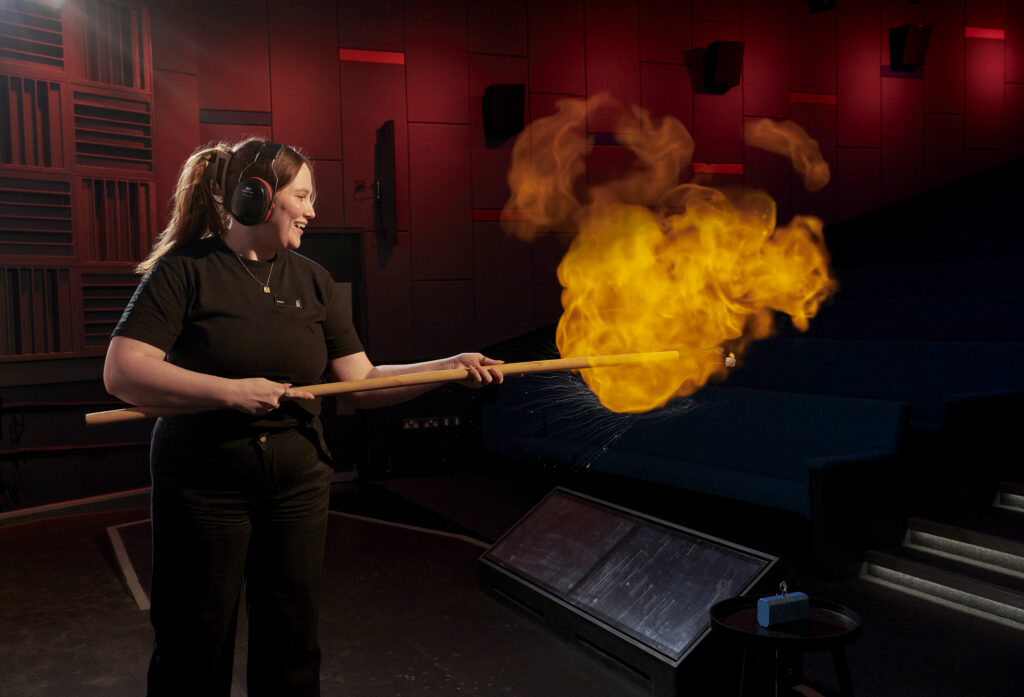
Science Museum Mission Control has a problem and only you can help us solve it! We’ll need to test, experiment and work together to help the future of space travel. There will be flames, fun and a floating plate of whipped cream! Do you have what it takes, aspiring space explorer?
Enjoy this exciting live show packed with out-of-this-world science demonstrations, taking place on Saturdays, Sundays and school holidays from Sat 20 Sep – Mon 5 Jan 2026. Free spaces are available on the day subject to availability.
Stop 2: Engineers gallery
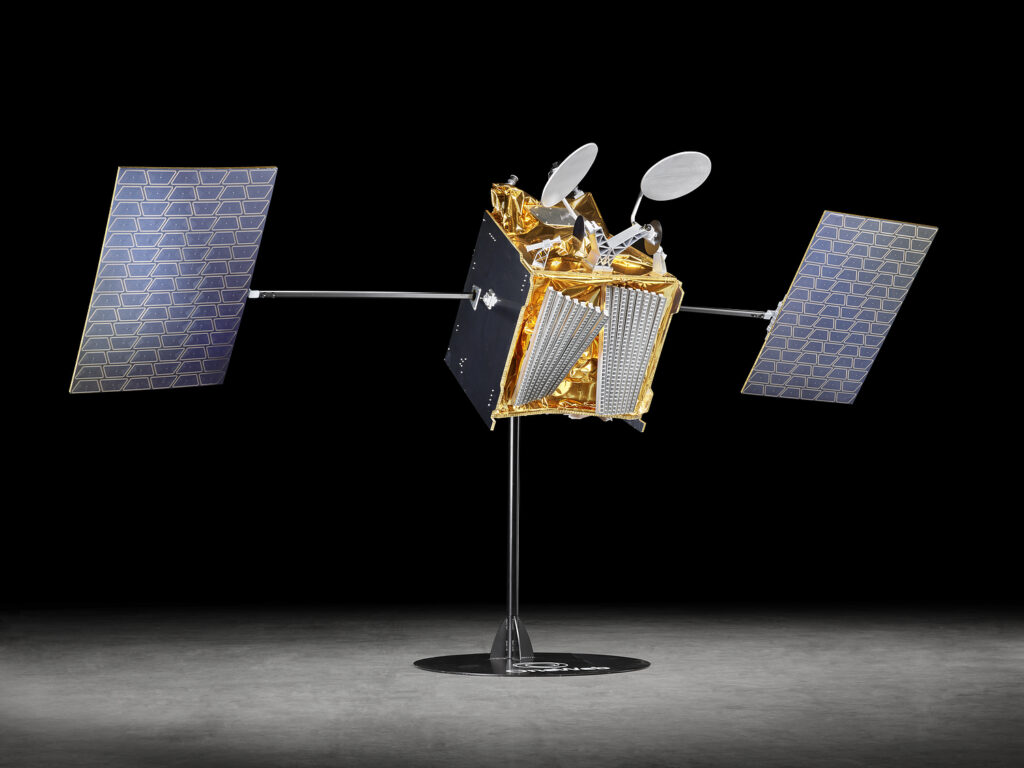
Head up to our Engineers gallery on Level 1 to find a suspended Replica OneWeb satellite. With ground-based internet infrastructure leaving almost half of the world’s population disconnected, engineers are working on satellites which can provide access to high-speed broadband from anywhere on Earth. Did you know that a group of satellites, just like stars, is called a constellation?
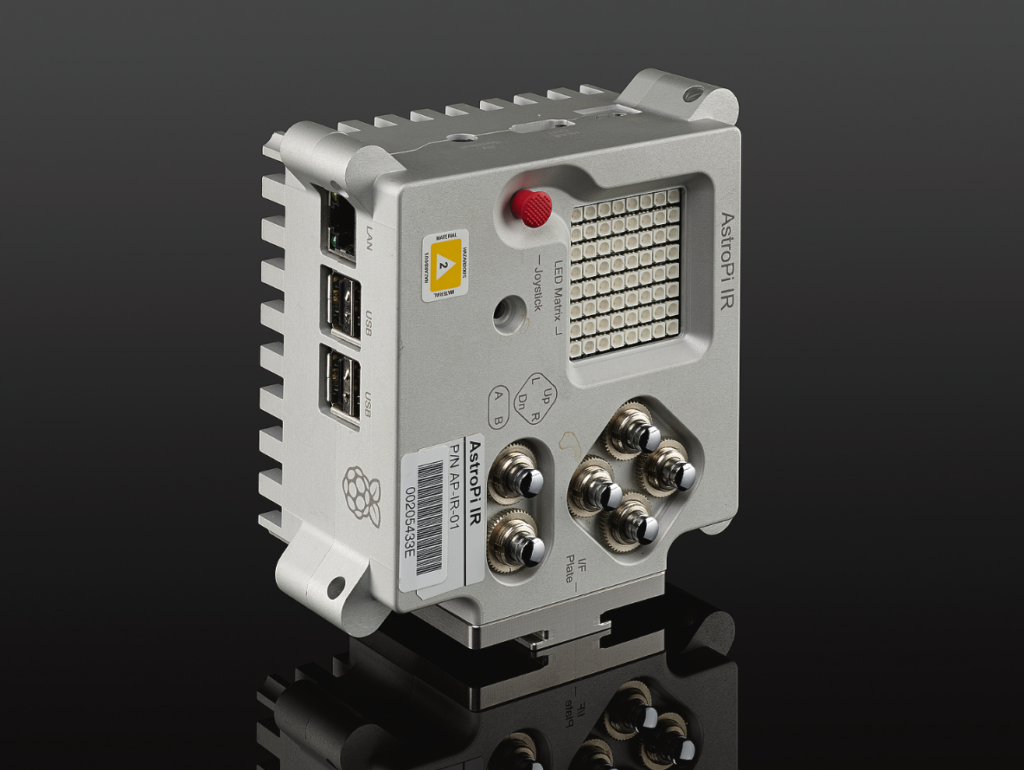
Take a look at the Being Creative display case to spot the Astro Pi computer. The European Astro Pi Challenge gives young people the opportunity to learn coding and run experiments in space using a Raspberry Pi – a small, adaptable computer. This Astro Pi computer was sent to the International Space Station in 2015. It ran thousands of experiments programmed by young people and sent the results back to Earth for analysis.
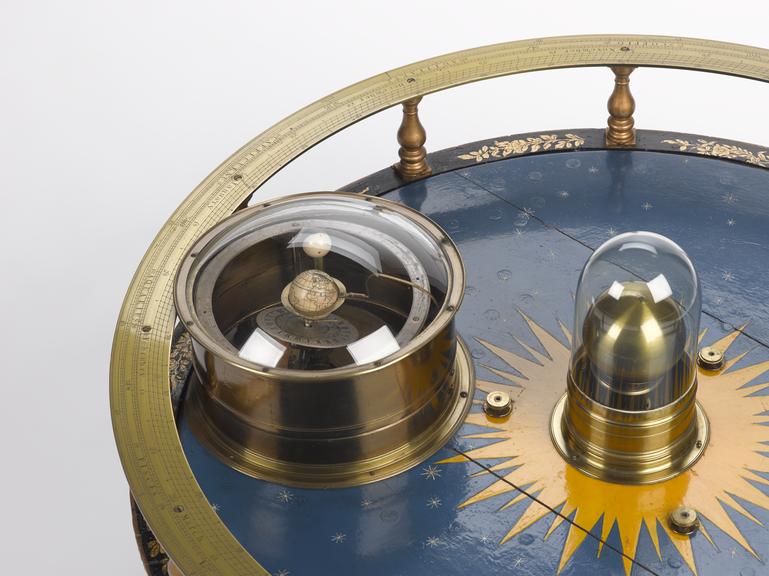
Stop 3: An orrery made for the Earl of Orrery
This colourful device is a type of planetary model, used to show the motions of the Earth and Moon around the Sun. By winding a handle on the side of the model, the Earth would be set into motion, turning on its axis around the Sun, with the Moon doing the same around our planet. Models like this became popular during the 17th century, especially after Sir Isaac Newton published his theory of gravity.
The example pictured here was made for Charles Boyle, the fourth Earl of Orrery in Ireland in 1712. This model, which was called an ‘orrery’ after the name of its owner, became so popular that it gave its name to all other models of the solar system.
Stop 4: Flight
Human beings have always looked at the sky above them as a space to explore. Before sending astronauts to space, the Moon and beyond, discover the story of how we took to the skies in our Flight gallery (Level 3) – from the first hot-air balloon flights to jumbo jets.
Stop 5: Space
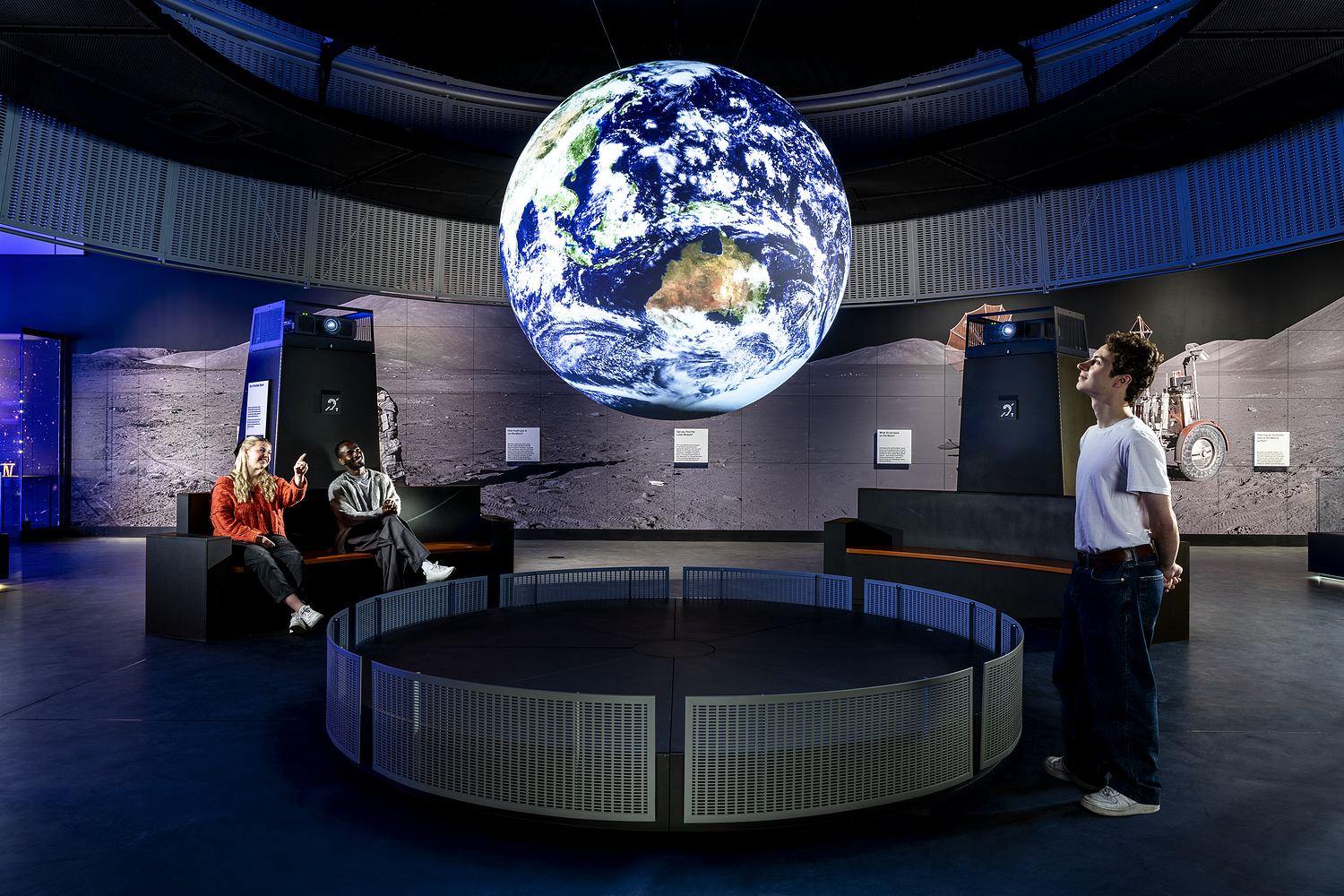
Head back down to the ground floor to find our exciting new free Space gallery, which celebrates the first space age and cutting-edge prototype technologies . See two human-flown spacecraft, the spacesuit worn by first Briton in Space Helen Sharman, and a three-billion-year-old piece of the moon, brought back to Earth by the Apollo 15.
Sit back and embark on a tour of the Solar System with Helen Sharman guiding you through Mercury, Mars and other planets and moons. Projected onto a large sphere at the heart of the gallery, Science on a Sphere will give you insights into these strange worlds.
Where to eat
Finally stop off at the Space café right next to the gallery. Try stone-baked sourdough pizzas, salads and desserts, as well as a selection of kids’ meals.
Try at home
Continue the fun at home with Wonderlab+ , the Science Museum Group’s free learning website that brings science to life through creative and fun experiments and games. Build a rocket launcher or test your space knowledge in our weird space facts quiz.
You can also explore objects from our Collection and the stories behind them to discover more about the enthralling history of space exploration.
The Science Museum is open 10.00-18.00, seven days a week. Head to our website to pre-book your free tickets.