For all the fanfare about the huge potential to treat and even cure disease, the uncomfortable truth is that precision editing of the human genetic code, or genome, remains a cottage industry.
Each of the more than 200,000 known harmful DNA mutations in humans typically requires its own bespoke therapy—a process of design, validation and regulation that is laborious and expensive.
Now, however, it seems that a long-held dream - that a single genome-editing strategy might treat a broad class of different diseases caused by ‘spelling mistakes’ in our DNA - may be possible.
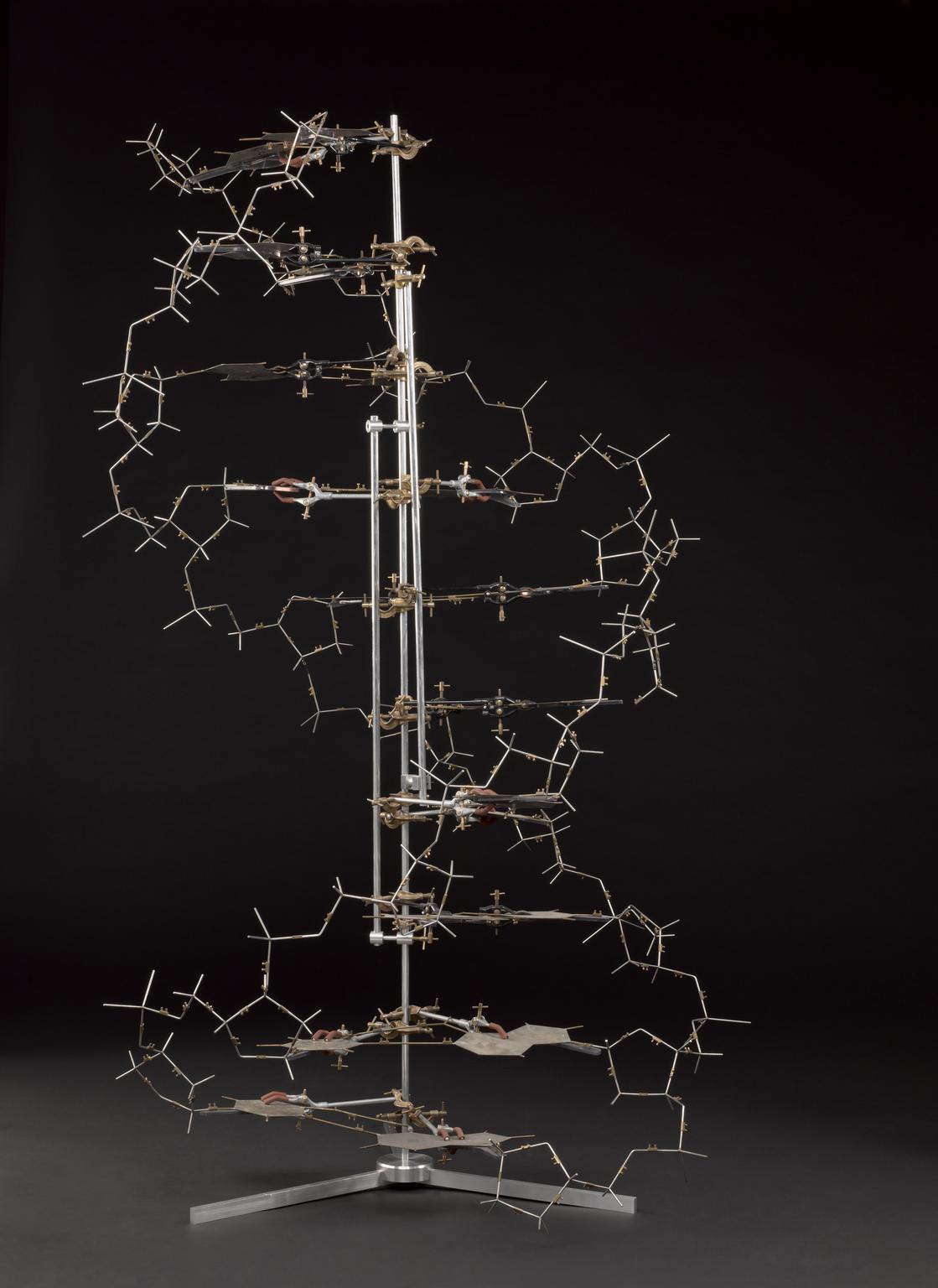
The journey to this flexible treatment began with the announcement in 2012 of an elegant way to precisely cut DNA using CRISPR-Cas9, which evolved as part of a natural defence system in bacteria for fighting viruses.
However, Prof David Liu, who works at the Broad Institute of MIT and Harvard in Cambridge, Massachusetts, points out that though CRISPR-Cas9 can make a targeted cut in DNA, it is “not directly fixing any genes” and is therefore “not directly applicable to treat the vast majority of genetic diseases that require precise gene correction, not further gene disruption.”
“As my mom asked me when I likened CRISPR-Cas9 to scissors: ‘How can you fix DNA with scissors?’.” So, Prof Liu and his team developed a refined approach more akin to a ‘find and replace’ function in a genetic word processor. Here, CRISPR–Cas9 is used to identify a faulty sequence and, he explains, “the ‘replace’ part comes from laboratory-evolved machines that convert one DNA sequence into another.”
These machines are called base editors and prime editors, and the potential is huge: “We all have 6 billion letters in our genomes. If we can fix mutations that cause thousands of genetic diseases back to the normal sequence, in many cases we believe we can treat the disease and possibly cure the disease for the lifetime of the patient.”
In one famous case, a baby nicknamed KJ was born with a rare and life-threatening condition called CPS1 deficiency, which prevented his liver from processing ammonia, leading to toxic buildup and a high risk of brain damage and death.
Earlier this year, Baby KJ became the first person to be treated with a personalised base editing therapy. Doctors and scientists at the Children’s Hospital of Philadelphia, the University of Pennsylvania, and other institutions, including Prof Liu, worked together to use a customised base editor in KJ’s liver to stabilise his ammonia levels. The treatment was successful, and KJ is thriving.
But now a practical problem arises: each and every harmful DNA mutation demands its own bespoke therapy. The longwinded and eye wateringly expensive process of designing, validating, manufacturing and shepherding each treatment through regulation is difficult to traverse for the myriad rare genetic diseases.
“Misspellings in our DNA cause 8,000 genetic diseases that collectively afflict 400 million people – even more than cancer – yet genetic disease is funded globally at a much lower level than cancer,” Prof Liu says. “It’s a large, underserved, population, in part because it is subdivided into 8,000 rare disease communities.”
A new study recently published by Prof Liu and his colleagues in Nature suggests a way out of this bind using what they call prime-editing-installed suppressor tRNAs—mercifully abbreviated to PERT—which targets a common type of genetic error known as a “nonsense mutation”.
These mutations are errors in the sequences of four genetic letters in genes that spell out how to make proteins – the molecular building blocks of the body – from protein subunits called amino acids.
When a nonsense mutation occurs, a sequence that originally encoded an amino acid is replaced with one that the body interprets as a ‘stop’ signal, truncating proteins so they are ineffective at best, harmful at worst.
Roughly 10–25% of all known misspellings that cause genetic diseases are early stop signals—from cystic fibrosis to Duchenne muscular dystrophy, Tay–Sachs, Batten disease and many rare metabolic conditions. A therapy that could restore full-length proteins to treat patients across this diverse group would represent a milestone in genetic medicine.
Old molecule meets new technology
PERT cleverly hijacks a crucial process involving an old piece of molecular machinery called the ribosome that cells use to turn DNA’s genetic code into flesh and bone: in the ribosome, molecules called transfer RNAs (tRNAs) help build proteins by matching the code to the right amino acid, that is, the correct protein building block.
In the early 1960s it was found that rare tRNAs, known as suppressor tRNAs, can read through a single stop signal, potentially rescuing proteins adversely affected by nonsense mutations.
The therapeutic potential of suppressor tRNAs has been explored for decades. But their use as medicine comes with problems. Delivering them requires repeated administration throughout the patient’s life, often in high doses, raising toxicity concerns. Moreover, the genetic code is full of natural stop signals to control protein manufacture, and overriding these (which can result from high levels of suppressor tRNAs) could garble proteins throughout a cell.
Prof Liu’s insight was to permanently install suppressor tRNA in a cell by converting one of the cell’s own tRNA genes into a tailored suppressor to deal with these erroneous stop signals. And the tool for that job is prime editing, a CRISPR-derived technology that can rewrite DNA with letter-by-letter precision.
Prof Liu’s team scanned every one of the 418 known human tRNA genes, then produced thousands of variants to identify which could be best repurposed as suppressors.
From this tRNA census emerged several standouts. The winner, an engineered version of tRNA Leu-TAA-1-1, could restore more than 35% of normal protein function in human cells after modification – a level that for many diseases would be therapeutic.
“Nature evolved CRISPR as a search-and-destroy machine,” he says. “We repurposed it into a search-and-replace word processor called a prime editor… and you can change virtually any local DNA sequence into virtually any other sequence this way.”
From cells to mice
In cell models of Batten disease, Tay–Sachs and cystic fibrosis – each representing distinct tissues and mutations – the same PERT treatment that installed the engineered tRNA effectively restored missing, working proteins. Perhaps more striking was its performance in mice. In a model of Hurler syndrome, a severe disorder caused by a nonsense mutation, a single dose of a prime editor restored protein levels to near normal and its many symptoms nearly vanished.
One worry was that PERT would not only override stop signals caused by mutation errors but also those in the genetic code that ensure a protein is the right size, notably one called the TAG stop codon. But, to Prof Liu’s surprise, they found no evidence of this after examining all 4,000 naturally occurring proteins that are terminated with TAG.
Fears that a rogue suppressor tRNA might run amok were not borne out in experiments. Across human cell lines and mouse tissues, the researchers detected no significant increase in readthrough of natural stop codons—an essential safety criterion.
One reason is down to simple statistics, he explains: “TAG is the most common premature stop codon but the least common natural termination codon. So, of the 20,000 or so human proteins that you have, only 4,000 are terminated with the TAG stop codon.”
Second, many proteins rely on clusters of redundant stop codons of different kinds, the equivalent of ‘STOP’, ‘stop’, and ’SToP’, so using suppressor tRNA to override ‘SToP’ would not affect ‘STOP’ or ‘stop’.
Third, “and maybe the most important factor”, cells hav evolved biological pathways to sense when a natural stop signal has been overrun, and “degrade the resulting protein and even the RNA that’s producing those proteins.”
Fourth, at the end of each genetic sequence for a protein there is machinery to coordinate protein manufacture, called release factors, which are the equivalent of ”you should really stop here,” he says.
Fifth, protein degradation machinery springs into action when natural stop signs are ignored.
And on top of that, as a sixth factor they designed PERT to be highly potent so that the PERT tRNA is only made at very low levels. If it does find a premature stop signal, “it will suppress the termination of translation at that premature stop codon, but it’s not so abundant in cells that it starts suppressing all natural stop codons.”
Analyses revealed the treatment was precise, with no detected off-target effects. And the global balance of tRNAs – which can affect the way DNA is translated into the protein building blocks of cells – remained largely untouched.
Why PERT matters to patients
Should PERT make it into the clinic, its implications would be profound since it could, at least in theory, be applied to thousands of different mutations across many different diseases.
Many people with cystic fibrosis carry nonsense variants in a gene called CFTR; more than 40,000 patients with Duchenne muscular dystrophy harbour premature stop codons. The same goes for patients with Stargardt disease, phenylketonuria and countless rare metabolic disorders.
“Gene editing is a very fundamental technology, he says. “Scientists, doctors, patient groups and ethicists are trying to balance a variety of ethical issues … There are clear-cut cases like Baby KJ’s, where editing is likely to save a life, but there are other cases that are much less clear-cut.”
For families facing the most devastating diagnoses, the hope is tangible. As Prof Liu notes, some parents of gravely ill children have told him: “I wish you guys would just stop obsessing with the off-target stuff.” What seems like an undesired scenario to a scientist can still be a huge upgrade compared to a very short lifespan and intense suffering.”
There is much work to be done to get PERT into the clinic and he aims to develop a suite of a dozen or so agents to overcome the various kinds of erroneous stop signals caused by mutations, which he hopes will undergo clinical trials in within five or ten years, providing the potential to remedy a common cause of many genetic diseases.
The hurdles ahead are familiar to scientists in the field: delivery of bulky prime editors to the right place in the body, finding the optimum dose, checking it does not trigger an unwanted immune response, manufacturing logistics, and durability. Regulators will also scrutinise any permanent change to genomic DNA, however precise, especially one intended for use across diverse patient populations.
If these challenges can be overcome, the hope is that this breakthrough will lead to a new class of “disease-agnostic” genetic medicines that target not mutated genes but the cellular processes that interpret them.
“A defining trait of our species is our relentless desire and ability to proactively shape our futures and the futures of our children,” he says. “I can think of no better example than the development of gene-editing technologies that finally give humans some direct say in our genetic futures, so that our DNA isn’t destiny.”